
 English
 中文简体
中文简体
A garment factory sourcing team recently asked us to quote a 190T polyester taffeta lining they had been buying through a trading house at a higher landed cost. The conversation quickly turned to three questions: Is taffeta the right construction for a wool-blend outer shell? What does the T count actually control? And can a water-repellent polyester lining still breathe? Those questions are the reason this guide exists. Polyester textile fabric is not one material; it is a family of yarns, weaves, and finishes that behave very differently once they reach a garment. This article covers its properties, structures, and the sourcing checks that matter.
What polyester textile fabric is
Polyester textile fabric is a synthetic woven or knitted material made from polyethylene terephthalate (PET), the same polymer family used in plastic bottles. The polymer is melted, extruded through spinnerets, and drawn into filaments that can be woven as flat yarns or textured for softness and bulk.
PET polyester accounts for the vast majority of apparel-grade polyester. The smaller PCDT category offers more elasticity but is rarely used in fabrics. Plant-based polyesters made from biomass perform like conventional polyester and require the same finishing and care.
Polyester dominates global textile supply because it combines high tensile strength, dimensional stability, and a production cost below most natural fibers. Compare a 210T polyester pongee with a cotton poplin of similar weight: the polyester is stronger, faster-drying, and cheaper per meter. That is why it became the default material for linings, outerwear, sportswear, and much of women's apparel.
Key properties and how they affect garments
Polyester's performance depends more on yarn denier, weave, and finishing than on the word "polyester" itself. Still, the base polymer has predictable strengths and weaknesses that shape every buying decision.
| Property | What it means in practice | Typical garment application |
|---|---|---|
| Tensile strength | Resists tearing, seam slippage, and abrasion | Linings, outerwear, workwear, bags |
| Wrinkle recovery | Returns to shape after folding or packing | Travel garments, suit linings, skirts |
| Moisture behavior | Wicks sweat but absorbs little water | Activewear linings; poor for heavy perspiration |
| Static and heat | Generates static; melts at high iron temperatures | Needs antistatic finish and low-heat pressing |
| UV and dye fastness | Holds dye well but some shades fade under prolonged sun | Outerwear, hijabs, printed apparel |
For linings, strength and wrinkle recovery are the main reasons buyers stay with polyester. A well-made polyester lining lets a jacket slide on and off, holds its shape after cleaning, and costs far less than acetate or viscose. The limitations are equally real: low moisture absorption feels clammy against the skin in hot weather, static builds up on dry days, and the fiber softens above roughly 200°C, so pressing must be done at controlled temperatures.
Weave structures and how to read a specification
Polyester textile fabric is woven in every structure used in the industry, and the structure controls the hand feel, drape, durability, and price. A specification like "75D x 75D, 210T, plain weave" tells you the yarn size in denier and the thread density in threads per inch. Higher T counts mean finer, denser, more expensive fabric with a smoother surface.
| Weave | Typical specification | Best suited for |
|---|---|---|
| Taffeta (plain) | 190T–230T, 50D–75D | Jacket linings, bags, umbrellas |
| Pongee (plain) | 190T–300T, 50D–75D | Softer linings, dress linings |
| Twill | 2/1 or 2/2, 75D–150D | Suit linings, trousers, workwear |
| Satin | 50D–75D, 4- or 5-harness | Dresses, evening wear, blouses |
| Dobby or jacquard | Varies by pattern | Visible linings, fashion details |
Taffeta is the workhorse: crisp, smooth, and inexpensive. A classic 190T polyester taffeta is a safe starting point for jacket and coat linings that need a clean slide and a low price. When the outer garment has more drape, or when the lining will be visible at a hem or cuff, 210T pongee lining offers a matte surface and a softer hand with the same practical performance.
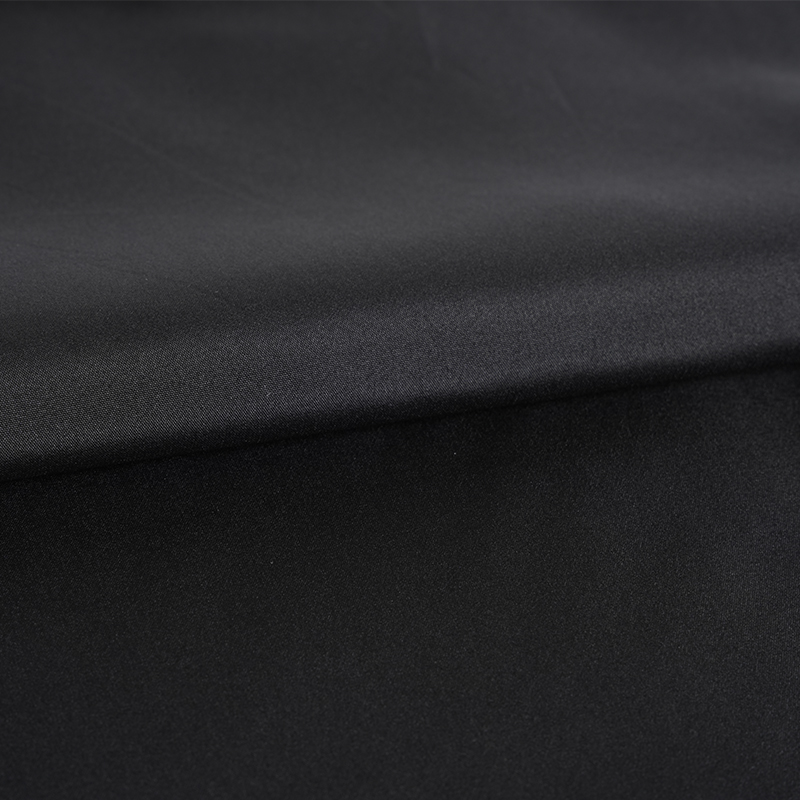 Wholesale Soft 210T Polyester Pongee Woven Fabric for Lining Suppliers, FactoryShaoxing Yongjun Textile Co.,Ltd is China wholesale Soft 210T Polyester Pongee Woven Fabric for Lining suppliers and factory. Item: P1...View Product →
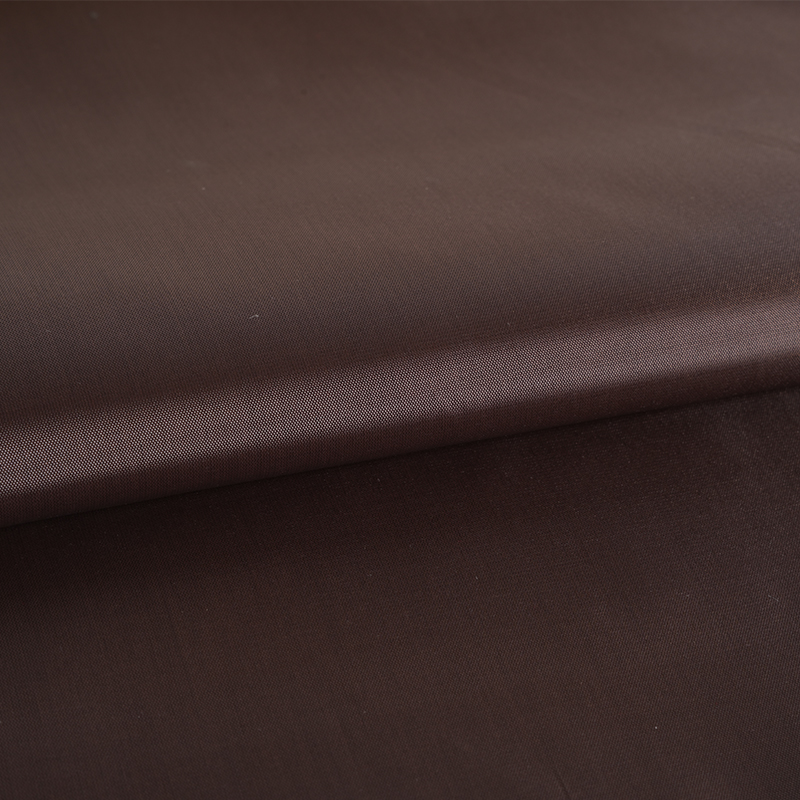 Wholesale 63D*66D 190T Polyester Taffeta Fabraic Suppliers, FactoryShaoxing Yongjun Textile Co.,Ltd is China wholesale 63D*66D 190T Polyester Taffeta Fabraic suppliers and factory. Item: P11001-56 We...View Product →
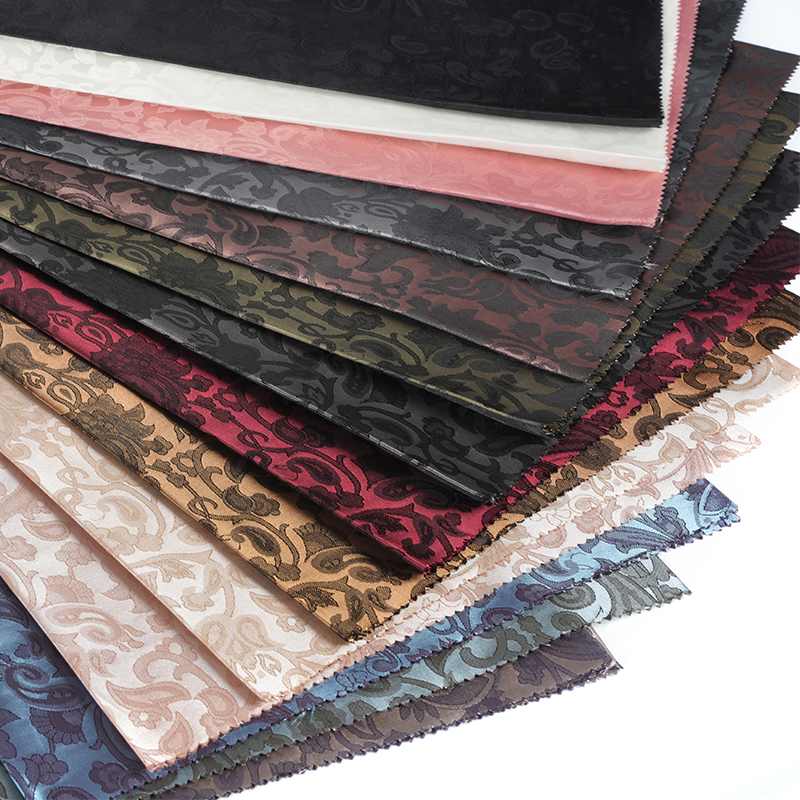
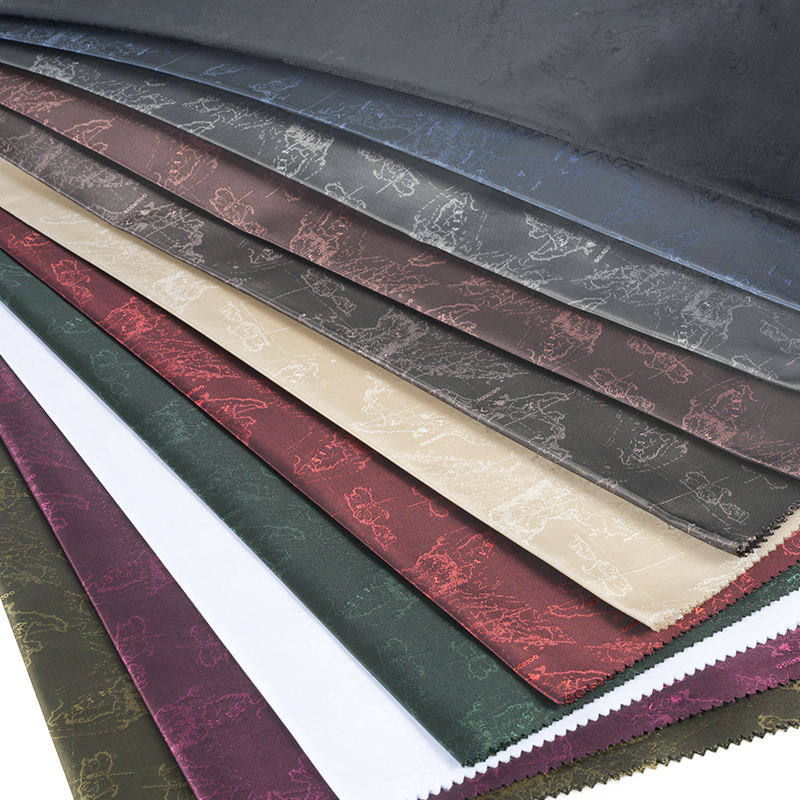
Twill and satin add surface interest and a different drape. Twill resists abrasion and appears in suit and trouser linings; satin gives a smooth, lustrous face for dresses and visible linings. Dobby and jacquard weaves put logos, geometric motifs, or water-ripple textures directly into the fabric; a cationic water-ripple dobby is a popular way to add a subtle design without a separate print or embroidery step.
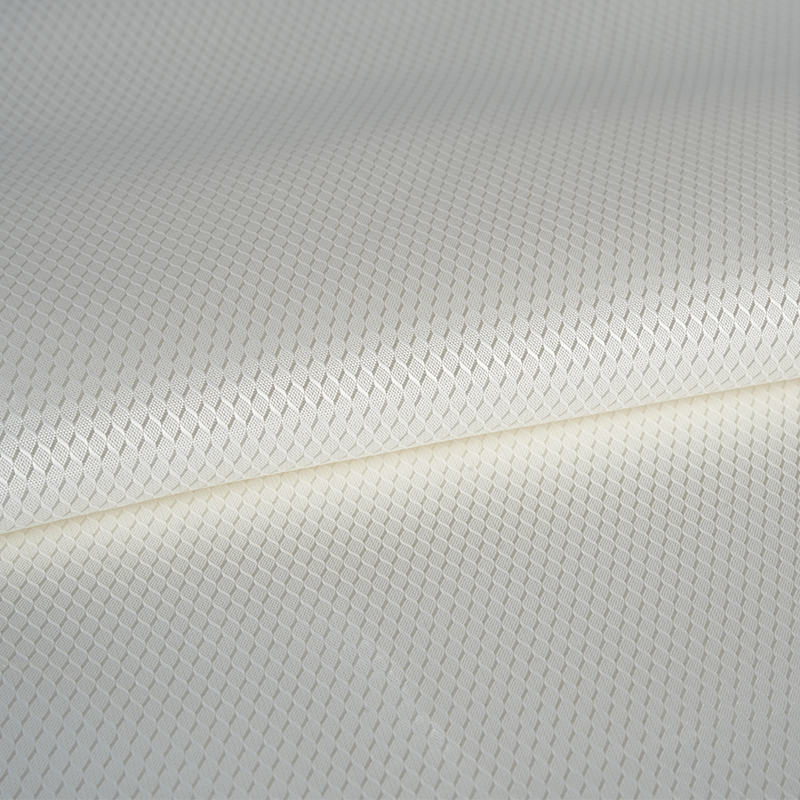 Wholesale Polyester Cationic Water Ripple Suppliers, FactoryShaoxing Yongjun Textile Co.,Ltd is China wholesale Polyester Cationic Water Ripple suppliers and factory. Item: YP12053 Weight: 68 ...View Product →
How polyester textile fabric is used in garments
Polyester in garment making falls into three broad categories. The first is lining: taffeta, pongee, twill, and satin constructions provide a low-friction inner layer for suits, jackets, coats, skirts, and trousers. The second is outer fabric, especially in women's apparel, where polyester chiffon, crepe, satin, and stretch woven fabrics appear in blouses, dresses, and lightweight outerwear. The third is finished products such as hijabs and scarves, where polyester's color yield, drape, and wash stability are valuable.
Polyester is also blended with other fibers to fix weaknesses. Polyester-cotton blends improve breathability and reduce static. Polyester-viscose blends add softness and a more natural hand. Polyester-spandex adds stretch for close-fitting silhouettes. These blends are part of our polyester lining product range, and choosing the right blend is often more important than choosing the yarn brand.
The most common mistake is treating all polyester as interchangeable. A 75D satin for a blouse behaves very differently from a 190T taffeta for a lining even though both are 100% polyester. Weave, yarn size, and finishing decide the final performance, which is why lining construction choices have a direct effect on garment comfort and durability.
Finishes that change polyester performance
The base fabric is only the start. Most polyester textile fabric sold to garment factories goes through finishing steps that determine its final feel and function. Disperse dyeing under high temperature and pressure gives excellent color fastness. Printing adds patterns, from simple pigments to digital prints.
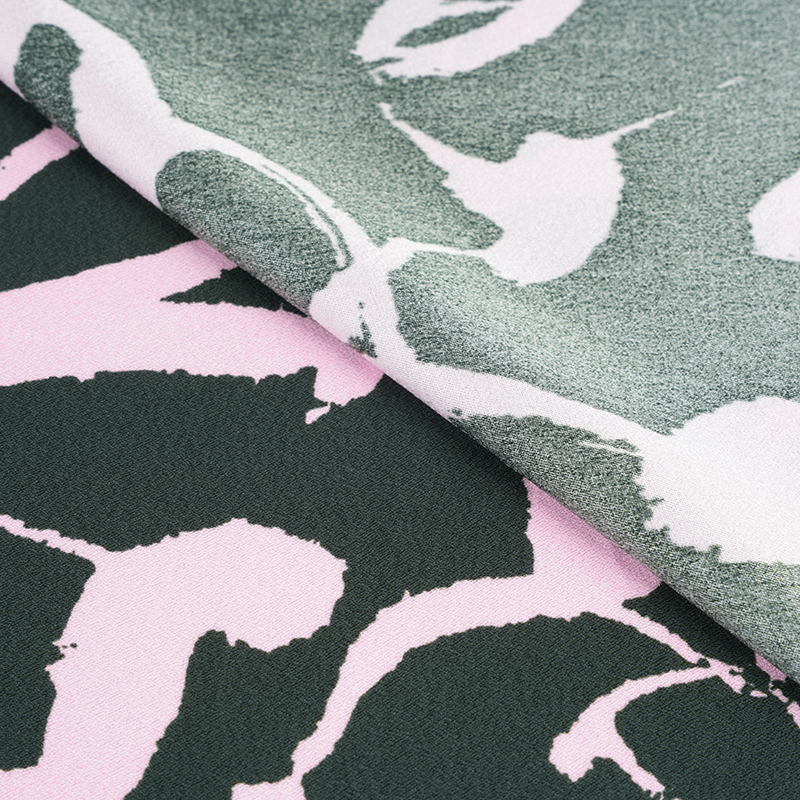
Coating and lamination add water resistance or a leather-like surface; a PU coating on lightweight pongee creates a water-repellent lining for rainwear and outdoor jackets. Calendering and embossing change surface texture, while foil stamping, burnout, embroidery, and pleating create fashion looks that still wash well.
Finishes affect price, lead time, and quality control as much as the base weave does. A poorly fixed print will bleed in the first wash; a badly cured water-repellent finish fails after one laundering cycle. Always ask for wash-fastness and water-repellency test reports before bulk production, and require shrinkage data in both warp and weft directions.
Recycled polyester and sustainability
Recycled polyester made from PET bottles or post-industrial waste is now a standard option. In most garments it performs the same as virgin polyester; the differences appear in cost, shade consistency, and certification. Brands with sustainability targets usually specify GRS-certified recycled polyester, which requires traceability from source to finished fabric.
The larger environmental concern is microfiber shedding during washing, a problem shared by all synthetics. Tight weaves, surface finishes that reduce fiber release, and cold, gentle washing all lower shedding. Remember that sustainability is not determined by polymer alone: a recycled polyester lining that fails after one year is less sustainable than a virgin polyester lining that lasts five.
A sourcing checklist for polyester fabric
Before confirming an order, verify these five points with your supplier:
- Fiber content and yarn spec: confirm 100% polyester or blend percentages and the exact warp and weft denier, such as 75D.
- Construction density: confirm the thread count so a substitute does not arrive lighter or looser than the sample.
- Finish and fastness: specify the dyeing route, coating, and required washing, rubbing, and light fastness ratings.
- Shrinkage: request tested values in warp and weft and compare them with your garment tolerance.
- Documentation: ask for restricted-substance test reports and, if needed, recycled content verification.
Working directly from yarn to finished fabric, we produce polyester linings and apparel fabrics against these specifications with consistent quality control, and we are happy to discuss sample development and bulk lead times.
Polyester textile fabric will stay at the center of garment production because it is dependable and economical, not because it is fashionable. Brands that use it well treat it as a technical material: they specify weaves, densities, and finishes instead of ordering "polyester" and hoping for the best. Start with the construction, verify the finish, test before bulk, and polyester fabric will deliver exactly the performance your design requires.
 Previous

 +86-81163100 / +86-13957571090
 Room B12148, Wanguo Center, No. 1388, Jinkeqiao Avenue, Keqiao, Shaoxing, Zhejiang, China