
 English
 中文简体
中文简体
When a garment fails on the inside, the problem is usually not the outer shell but the lining. For most apparel manufacturers, polyester textile fabric has become the default answer for polyester fiber lining: it is durable, wrinkle-resistant, fast-drying, and available in a wide range of weaves and weights. This guide explains what polyester lining is, how it compares with other lining fibers, and which specification details you should verify before placing an order.
What Is Polyester Textile Fabric? A Quick Technical Foundation
Polyester textile fabric is made from polyethylene terephthalate (PET), a synthetic polymer produced by polymerizing ethylene glycol and terephthalic acid. The polymer is melted, extruded through spinnerets, and cooled into continuous filaments. For lining applications, these filaments are normally used as flat filament yarn rather than spun staple fiber, which gives the fabric a smooth, low-friction surface and consistent strength.
Filament polyester can be woven at different densities, measured in T-count and yarn denier. A 190T polyester taffeta, for example, has a looser construction than a 300T version. When you understand this basic relationship, you can predict how a lining will behave: higher density usually means more structure and better opacity, while lower density saves cost and weight. That is why the same base fiber can serve both a budget-friendly blouse lining and a structured winter coat lining.
Why Choose Polyester Fiber Lining? Key Performance Benefits
Polyester fiber lining delivers five practical benefits that matter in production and in use:
- Durability: Polyester fibers have high strength and abrasion resistance, so the lining survives frequent wear, dry cleaning, and the friction of arms moving through sleeves.
- Wrinkle resistance and shape retention: The fibers spring back after bending, which helps jackets, blazers, and coats hold their intended silhouette.
- Quick drying and easy care: Low moisture absorption means the lining dries fast after washing and is less likely to develop water stains.
- Mildew and moisture resistance: Polyester tolerates humid environments better than many natural fibers, making it suitable for rainwear and tropical markets.
- Cost efficiency: Polyester is less expensive than acetate, cupro, or silk, and its supply is stable enough for large production runs.
In lining terms, these benefits translate directly into the four goals a lining should meet: reducing transparency, adding warmth, hiding internal construction, and helping the garment slide on and off. Polyester handles each of those tasks with minimal maintenance.
Main Types of Polyester Lining Fabric: From Taffeta to Stretch
Polyester lining is not one product. It is a family of weaves and finishes, and each type changes the way a garment performs. The following breakdown covers the types you will encounter most often from lining manufacturers.
Taffeta Lining (Plain Weave)
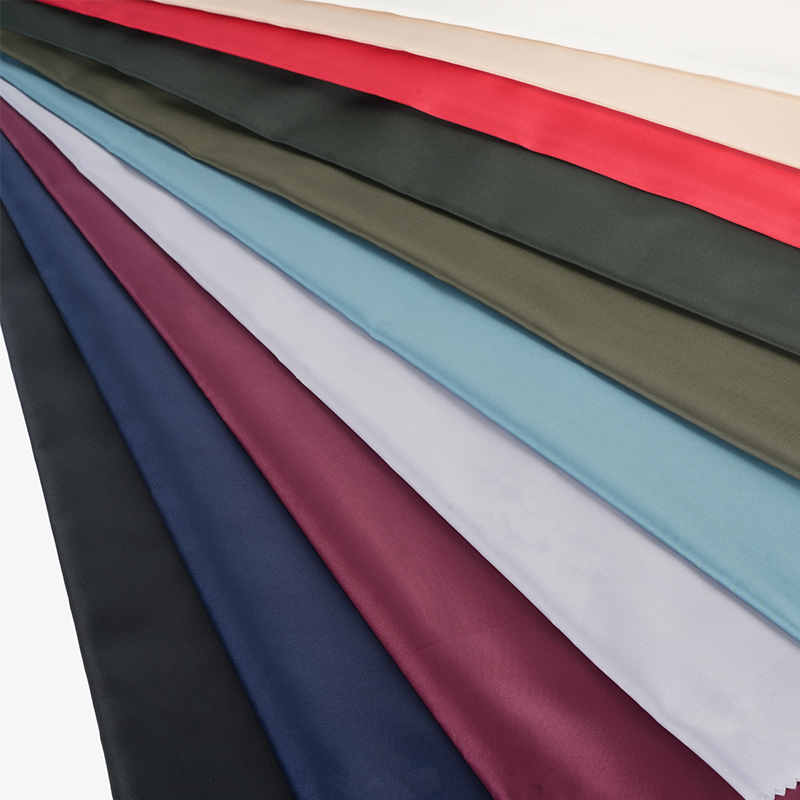
Taffeta is the classic plain-weave polyester lining. It is smooth, slightly stiff, and offers the lowest cost per meter. Common specifications include 190T, 210T, 230T, and 300T; the higher the T-count, the denser and finer the fabric feels. Taffeta is a safe default for suits, blazers, and coats where you need structure without bulk. Compare 190T to 300T polyester taffeta lining options to see how density changes the hand feel.
Pongee Lining (Plain Weave Variant)
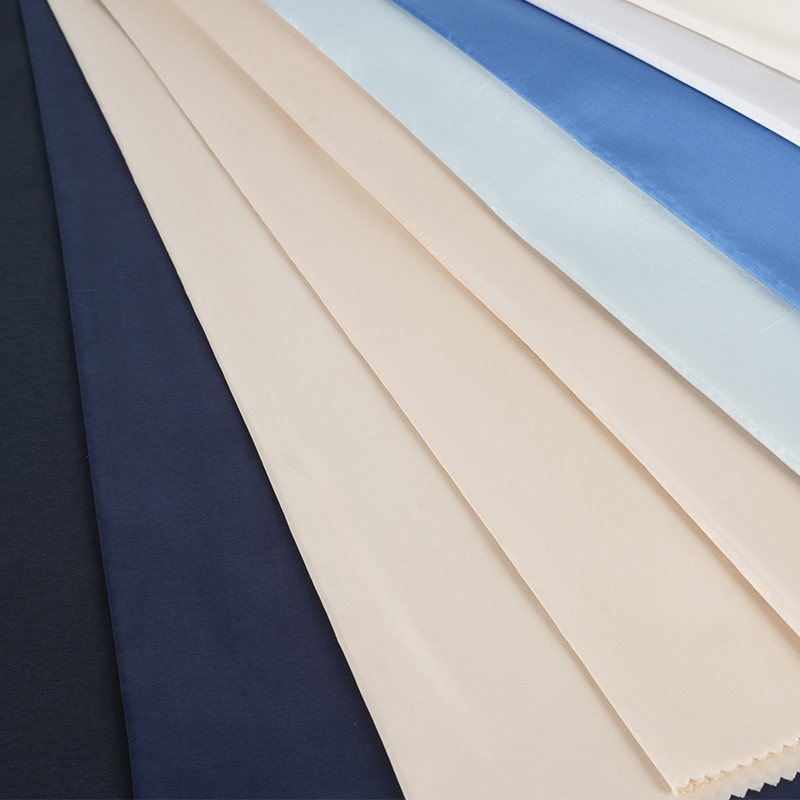
Pongee is a plain-weave variant that is softer and more comfortable against the skin than taffeta. Its surface has a subtle matte finish, which makes it useful for garments where the lining sits closer to the body. Standard specifications include 190T, 210T, and 300T. Browse pongee lining in 190T, 210T and 300T for dresses, blouses, and lightweight outerwear. For a ready-made mid-weight option, you can start with 210T pongee lining for dresses and light jackets.
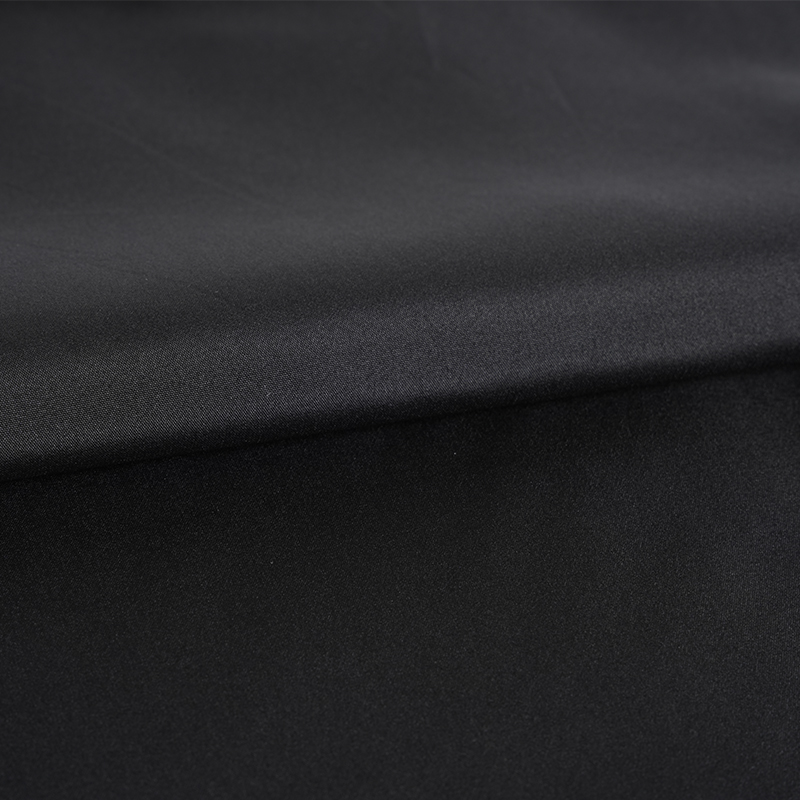 Wholesale Soft 210T Polyester Pongee Woven Fabric for Lining Suppliers, FactoryShaoxing Yongjun Textile Co.,Ltd is China wholesale Soft 210T Polyester Pongee Woven Fabric for Lining suppliers and factory. Item: P1...View Product →
Twill Lining
When you need more strength and drape, twill lining is the next step. The diagonal weave construction creates a more substantial hand, and the fabric tends to move better with the body. Common twill products include polyester coarse twill and Shumei silk, a polyester lining style with a slightly silkier finish. Explore polyester twill lining fabrics including Shumei silk for medium-weight jackets, trench coats, and tailored trousers.
Poly Dobby and Poly Jacquard
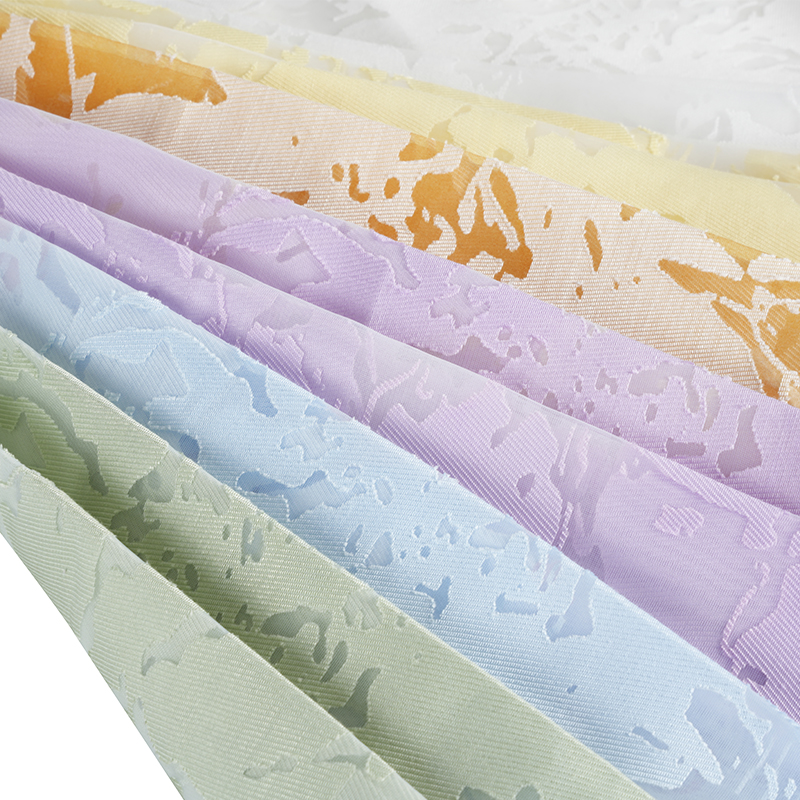
Dobby and jacquard linings add a decorative element to the inside of a garment. Dobby weaves insert small repeating patterns such as cationic water ripples or square-dot diamonds. These patterns are subtle enough for business wear but add a point of difference when the jacket is removed. Cationic water-ripple and diamond dobby linings are often used in womenswear and brand customization.
Jacquard polyester linings go further, with larger woven motifs such as flowers, geometric shapes, or custom brand marks. The woven construction keeps the design visible without printed surface wear. See polyester jacquard linings with cationic patterns for higher-impact interiors.
Stretch Polyester Lining
Stretch polyester lining combines polyester filaments with spandex, usually around 3 to 7 percent spandex. The result is a fabric that moves with the wearer and recovers cleanly. Typical specifications include 225T and 230T poly-spandex pongee, as well as stretch satin. Review poly-spandex stretch lining fabrics for activewear, leggings, and slim skirts.
Coated and Finished Polyester Lining
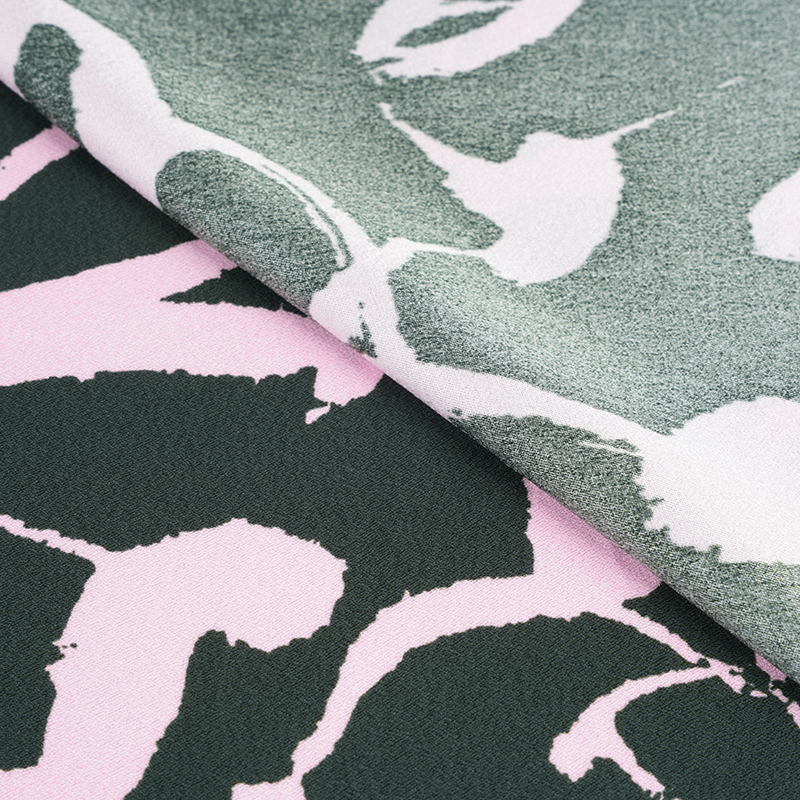
Finishing can change polyester lining from a basic utility material into a functional or branded component. PU coating and waterproofing add protection for outdoor garments, while calendering creates a smoother, glossier surface. Printing allows patterns, logos, or seasonal colors on the reverse side. Check printed polyester lining designs if your collection needs a recognizable interior.
Polyester Lining vs. Viscose, Acetate and Silk: An Honest Comparison
Polyester is not always the best answer. When you need breathability, natural moisture absorption, or a luxury hand feel, viscose, acetate, cupro, and silk may perform better. The table below summarizes the practical trade-offs.
| Fiber | Hand feel | Breathability | Static behavior | Cost and supply | Best suited for |
|---|---|---|---|---|---|
| Polyester | Smooth, crisp, low-friction | Low moisture absorption; can feel warm | Prone to static unless finished | Low cost, stable supply | Suits, outerwear, daily wear |
| Viscose | Soft, cotton-like drape | Better moisture absorption | Less static | Moderate cost | Dresses, blazers, lined skirts |
| Acetate | Silky, luxurious | More breathable than polyester | Low static | Higher cost | Premium dresses and tailored pieces |
| Cupro | Very smooth, supple | Good moisture regulation | Low static | High cost, limited supply | High-end garments and sensitive skin |
| Silk | Natural, fluid drape | Excellent | Low static | High cost, delicate care | Luxury eveningwear |
Use polyester when cost, durability, and reliable supply are the priorities. Move to acetate or cupro when the garment needs a silkier drape and better breathability, and the retail price justifies the added cost. For projects that require both, a blended poly-rayon twill can sit between the two extremes. If you are weighing higher-end options, review higher-end lining alternatives before finalizing the material spec.
How to Choose Polyester Fabric for Lining: A Practical Selection Checklist
To specify the right polyester lining, match the weave to the garment, the density to the season, and the finish to the brand position. The starting points are simple:
- For suits, blazers, and outerwear, choose taffeta or twill lining.
- For dresses, blouses, and lightweight jackets, choose pongee or a soft satin version.
- For stretch garments, choose poly-spandex pongee or stretch satin.
- For outdoor and performance garments, choose a coated or waterproofed lining.
T-count and yarn denier control the balance between cost and behavior. A 75D polyester yarn at 190T produces a light, breathable lining for spring pieces. A 300T version of the same fabric is denser, more opaque, and better suited to winter coats. Before you commit, verify these parameters:
- Fiber composition: 100% polyester versus polyester/spandex, and the exact spandex percentage.
- Yarn denier: 75D is standard for lightweight linings; heavier deniers add substance.
- Fabric density: 190T, 210T, 230T, or 300T, depending on the intended garment weight.
- Color fastness: ask for wash and dry-cleaning test results.
- Finishing requirements: antistatic, waterproof, PU coating, calendering, or printing.
- Environmental certifications if your target market requires them.
Sourcing Polyester Lining Fabric: What to Verify with Your Supplier
Once you have narrowed down the weave, density, and finish, the supplier verification process determines whether the production run will match your sample. Start by reviewing the full lining fabric collection to see which weaves and finishes are available from one supplier. Then work through these checks before confirming an order:
- Sample approval: confirm hand feel, shade, shrinkage, and color fastness on a physical cutting.
- Bulk consistency: compare the lab dip and production sample for density, weight, and shade stability.
- Finishing capability: confirm whether printing, coating, calendering, and waterproofing are done in-house or outsourced.
- MOQ and lead time: give your projected yardage and ask for a schedule that fits your production calendar.
- Export and documentation: direct import and export rights reduce paperwork, and available certifications simplify customs clearance.
If you are sourcing in volume, ask for physical samples of a few T-counts in the same weave. Comparing them under the same light and on the same garment style will show you the difference between a lining that simply exists and one that actually helps the garment perform.
 Previous

 +86-81163100 / +86-13957571090
 Room B12148, Wanguo Center, No. 1388, Jinkeqiao Avenue, Keqiao, Shaoxing, Zhejiang, China