
 English
 中文简体
中文简体
Lining fabric is usually chosen late in the development process, but it is one of the first things a customer sees when they open a jacket. Jacquard lining fabric changes that moment. Instead of a plain face, there is a woven pattern with texture, depth, and a sense of intention. For garment factories, brands, and tailors, jacquard lining is a practical way to differentiate a finished piece without altering any other part of the design.
What Is Jacquard Lining Fabric?
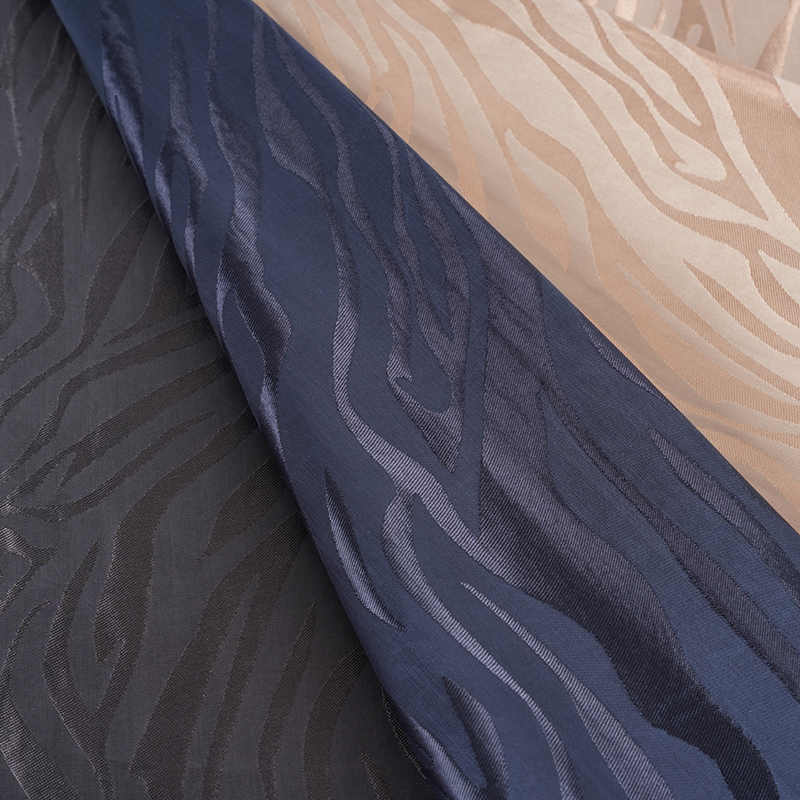
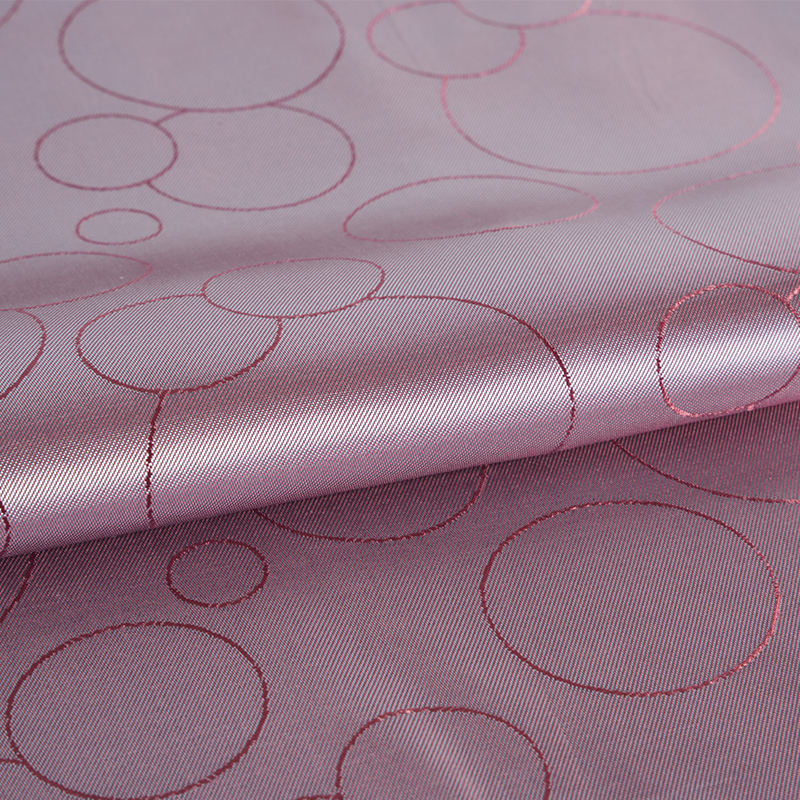
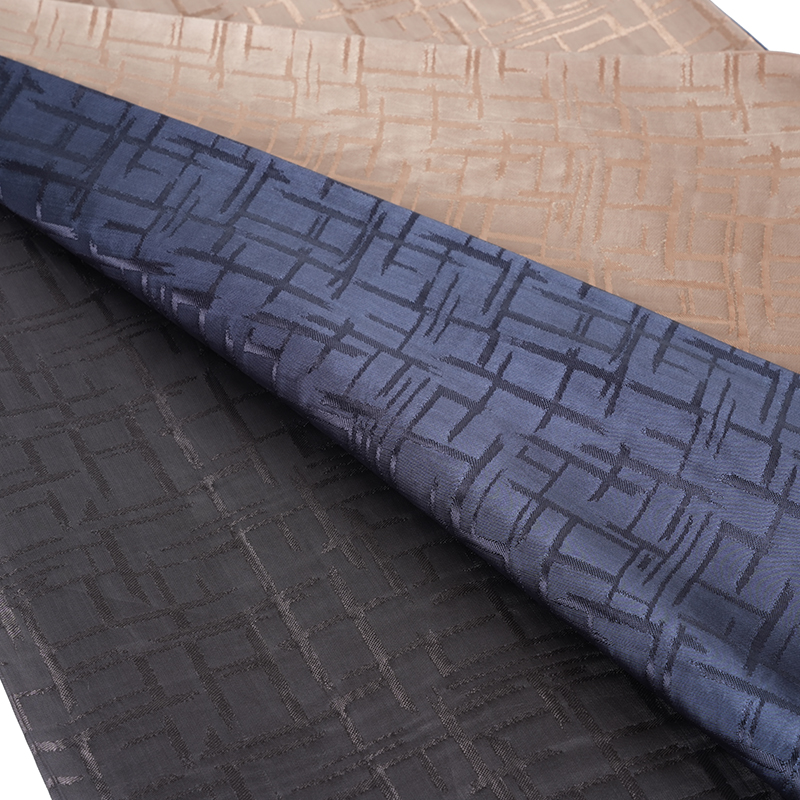
Jacquard lining fabric is made with a jacquard weave, which means the pattern is created during weaving by controlling individual yarns, rather than by printing ink on top of a finished cloth. The pattern is therefore part of the fabric structure. It will not peel, and it usually holds its appearance better than a surface-printed lining under abrasion and repeated dry cleaning.
Although jacquard is often associated with heavy decorative furnishing fabrics, jacquard linings are woven light enough for use in garments. The fibers matter more than the name. Polyester jacquard is crisp and cost-effective, while viscose gives a softer, more fluid hand. Acetate blends add a smooth, static-resistant feel that works well in tailored jackets.
Why Choose a Jacquard Lining?
- It adds perceived value: a patterned lining turns an ordinary coat into a more considered product.
- The pattern lasts because it is woven into the structure, not printed on the surface.
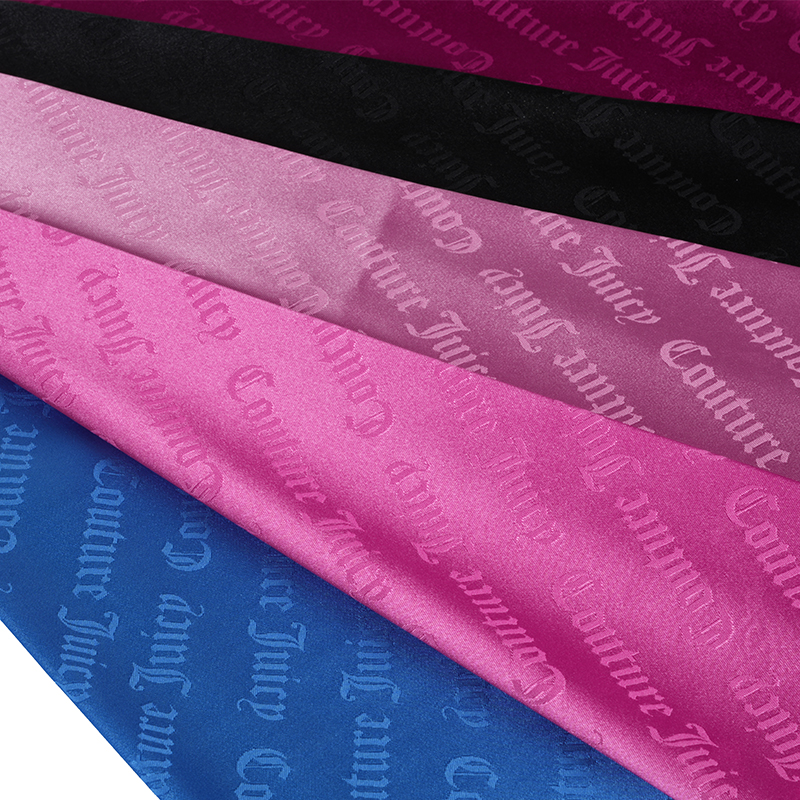
- It opens branding options such as woven logos, monograms, or house motifs.
- It can be structurally useful: heavier jacquard linings help a garment hold its shape, especially in open-front jackets and coats.
The main trade-off is cost. Jacquard weaving is slower than plain weaving, and the minimum quantities tend to be higher. The pattern can also affect how easily the lining slides over other layers, so you need to check the hand before committing to a large order.
Common Types of Jacquard Lining Fabric
Under the jacquard category, there are several material families. Each behaves differently in production and end use, and the fiber choice should come before the pattern decision.
| Lining Type | Typical Fibers | Best For | Main Trade-off |
|---|---|---|---|
| Polyester jacquard | Polyester, cationic yarns | Trend-led outerwear, casual blazers | Less breathable than viscose |
| Poly-viscose jacquard | Polyester and viscose | Everyday suiting, dresses | Pattern range can be narrower |
| Viscose jacquard | 100% viscose | Premium dresses, tailored jackets | Higher cost, heavier weight |
| Acetate-blend jacquard | Acetate, viscose, polyester | Luxury coats and formalwear | Requires careful garment care |
Viscose jacquard is a good choice when a dress or jacket needs a soft drape and a premium touch. A 75D viscose jacquard, for example, provides enough weight for tailored shapes without feeling stiff.
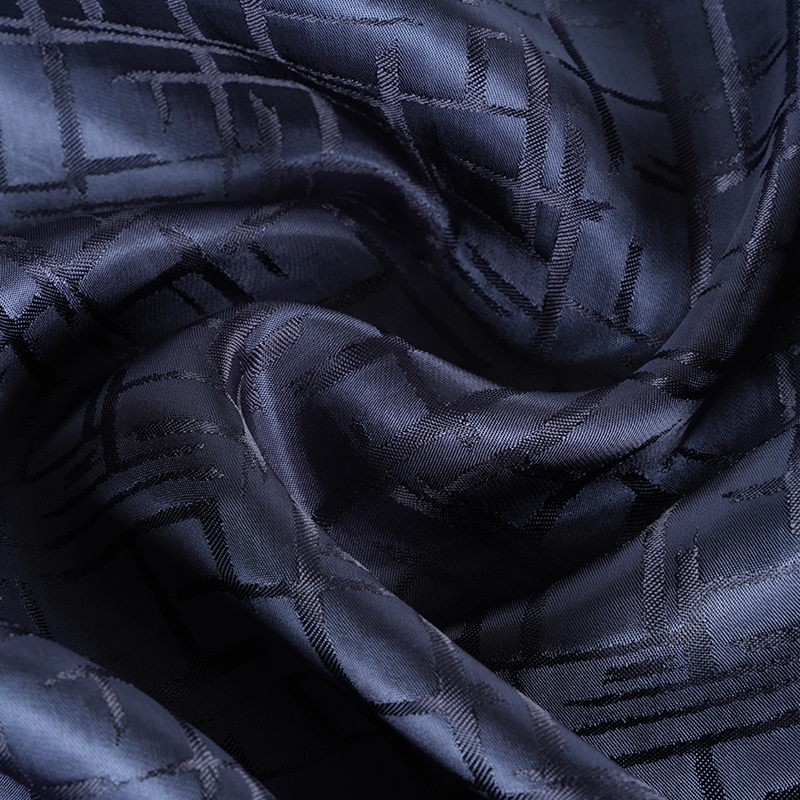 75D Exquisite Viscose Jacquard Lining for Tailored GarmentsThis viscose jacquard lining offers a soft drape and subtle luster, with breathability and moisture absorption that keep garments comfortable. Its refined pattern and delicate weave make it suitable for dresses and jackets needing a premium interior finish.View Product →
Poly-viscose jacquard, often shortened to PV, is a practical workhorse in the category. The polyester base gives strength and dimensional stability; the viscose adds a slightly natural hand. This construction is often used for jacquards that need to keep a clean line through the shoulder of a blazer.
Polyester jacquards with cationic yarns produce the characteristic two-tone effect: one part of the pattern is dyed, while the other stays pale. This is a popular way to get contrast without printing.
Jacquard Lining vs Plain and Twill Lining
It helps to compare jacquard with the two most common lining weaves: plain and twill. Plain lining is smooth, fast to weave, and inexpensive, but it offers no decorative texture. Twill has a diagonal rib that makes it slightly softer and more durable than plain. Jacquard adds a woven pattern and can be engineered with different bases.
| Criteria | Plain Lining | Twill Lining | Jacquard Lining |
|---|---|---|---|
| Pattern | None or very simple | Diagonal weave | Woven decorative pattern |
| Drape | Varies by fiber | Good, supple | Depends on pattern density |
| Cost | Low | Medium | Higher |
| Best Use | Shirts, skirts | Suits, pants | Statement pieces, luxury outerwear |
If you are still deciding among basic linings, our comparison of plain lining vs twill lining explains how those two weaves affect garment performance. Jacquard is best chosen when the interior of the garment is part of its appeal.
How to Select Jacquard Lining Fabric
Selection is not only about the pattern. A jacquard lining has to satisfy the same technical requirements as a plain one: slip, abrasion resistance, dimensional stability, and compatibility with the outer fabric. The difference is that the pattern can hide problems like seam slippage or poor colorfastness until the garment is already in production.
- Check the drape on a bias. Fold the lining at 45 degrees to see how it behaves in a sleeve or a flared skirt.
- Confirm the slip angle. Line a small sample against the outer fabric and see whether a sleeve slides over a jacket body easily.
- Run a color transfer test. Rub the lining against white cotton cloth, both dry and with a little moisture.
- Ask for shrinkage data. Most lining fabrics are expected to stay within a 3% shrinkage tolerance after washing or steam pressing.
- Look at the reverse side. Jacquard patterns often have floats on the back, and these can catch on fingernails if the weave is too loose.
For garments that need a balance between cost and comfort, a poly-viscose jacquard is often the right starting point. It accepts dye well, presses cleanly, and does not cost as much as an acetate-grade lining.
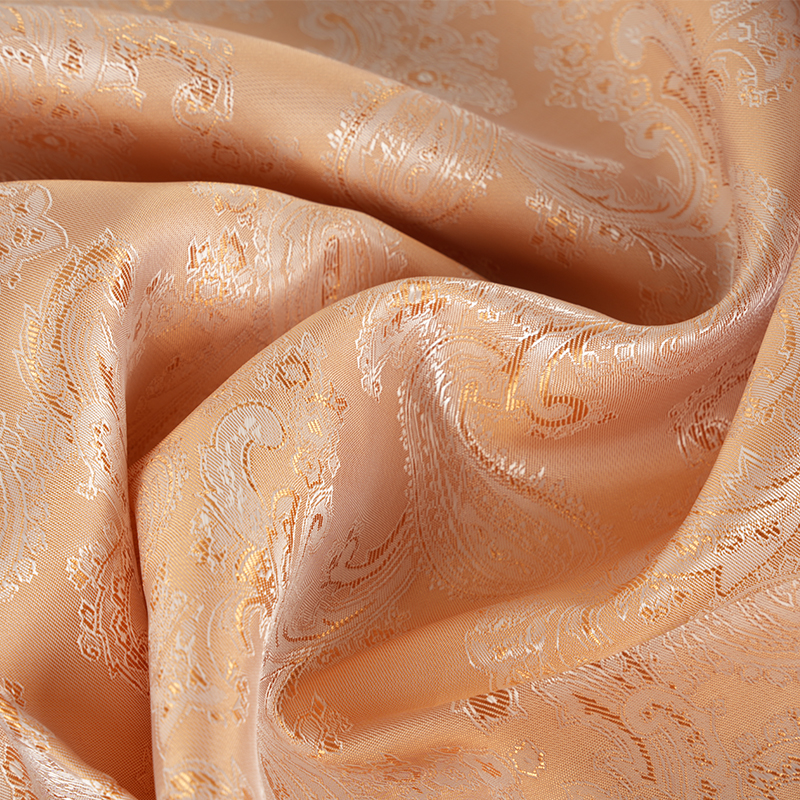 Pipa Flower Jacquard in Poly-Viscose BlendA balanced 52% polyester and 48% viscose jacquard with a floral pattern, weighing 90g/m and 145cm wide. Its moisture-wicking, wrinkle-resistant properties suit high-end clothing and home decoration, and its construction helps maintain clean lines in tailored pieces.View Product →
Working With Jacquard Lining on the Factory Floor
The production floor should treat jacquard lining differently from plain lining in three ways. First, check pattern repeat before cutting. If the design contains a large motif, each panel has to be placed so the repeat falls in the right position. Second, use a sharp but not oversized needle, especially on viscose jacquard, to avoid pulling the weave. Third, test seam construction with the actual lining and outer fabric before bulk cutting.
A small pre-production trial is worth the time. It shows how the jacquard pattern behaves around zippers, vents, and sleeve heads, and it gives the sewing team a chance to adjust tension before expensive errors are repeated across hundreds of garments.
Sourcing Jacquard Lining Fabric for Production
A reliable supplier makes a difference when you need to match patterns, maintain color consistency, and protect your production schedule. Shaoxing Yongjun Textile Co., Ltd. has produced lining fabrics since 2003 and is based in China Textile City, close to Hangzhou Xiaoshan International Airport. The company carries a broad range of jacquard, dobby, plain, and twill linings, with direct export handling.
Because jacquard patterns are woven, the factory has to understand yarn preparation, dyeing, and finishing. That experience matters when you ask for a custom pattern or a slight change in shade. For example, a polyester cationic jacquard with a leopard pattern can be produced with the contrast level adjusted through the dyeing recipe.
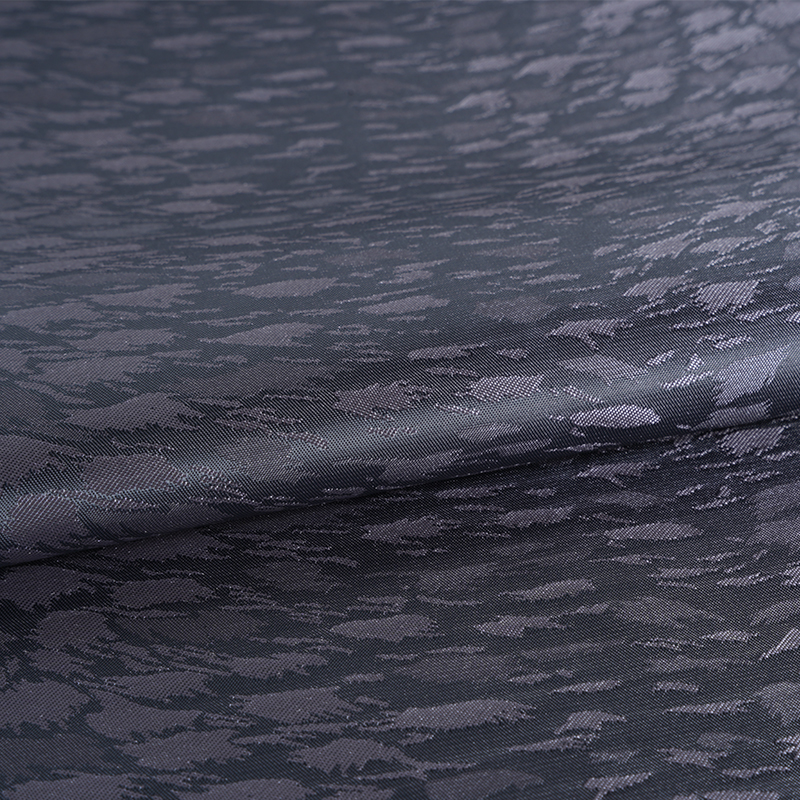 Cationic Leopard Print Jacquard Lining FabricThis jacquard lining combines cationic and polyester fibers to create a dimensional leopard pattern with a two-tone dye effect. It offers a smooth texture, luster, and wear resistance, making it a practical choice for fashion-forward garments that emphasize design details.View Product →
Jacquard lining fabric is not a niche decorative product; it is a practical option for any garment where the interior is part of the customer experience. If you are developing a collection, start with the fiber behavior rather than the pattern, and always request a physical sample before grading it into production. The right jacquard lining will protect the outer fabric, help the garment keep its shape, and make the finished piece feel more complete.


 +86-81163100 / +86-13957571090
 Room B12148, Wanguo Center, No. 1388, Jinkeqiao Avenue, Keqiao, Shaoxing, Zhejiang, China