

 English
 中文简体
A trouser program failed on a detail nobody had written down. The shell cloth passed its tests and the sewing was clean, but after six weeks the pocket bags had thinned, gone shiny and split along the bottom seam. The pocket lining fabric had never been specified, so the factory used whatever light twill was on the shelf.
Pocket lining is one of the hardest-working fabrics in a garment. In a pair of jeans, the pocket bag is rubbed by a hand, a phone and a set of keys dozens of times a day, then washed with the garment for years. Three variables decide whether it survives: fiber, weave density, and the abrasion standard written into the purchase order. Price per meter follows from those three; it does not replace them.
What Pocket Lining Fabric Is, and Where It Sits
Pocket lining fabric, usually shortened to pocketing and historically sold as silesia, forms the inside of a pocket bag. It is bought separately from a jacket's main lining, often in a different color, weight and weave, and it appears in jeans, chinos, tailored trousers, blazers, coats and bags.
The three lining positions do different jobs. Sleeve lining exists to let an arm slide in. Body lining slides over a shirt and conceals construction. Pocketing has to survive friction, tension and repeated washing while staying smooth enough that a hand never catches on it.
| Position | Typical weight | Common weaves | Fibers used | Primary job |
|---|---|---|---|---|
| Pocket bag (pocketing) | 70 to 150 g/m² | Plain, 2/1 twill, ripstop | Cotton, poly-cotton, polyester, nylon | Abrasion and tear resistance, smooth hand |
| Sleeve lining | 55 to 90 g/m² | Plain, satin, light twill | Polyester, viscose, acetate, silk | Low friction for arm entry |
| Body lining | 70 to 120 g/m² | Twill, satin, dobby, jacquard | Polyester, viscose, PV, acetate | Slip, drape, comfort over the shirt |
Because pocketing is hidden, it is often bought on price alone. That is exactly where the risk sits, because it is the one lining a wearer touches every time the garment is used, and the one most likely to be noticed when it gives out.
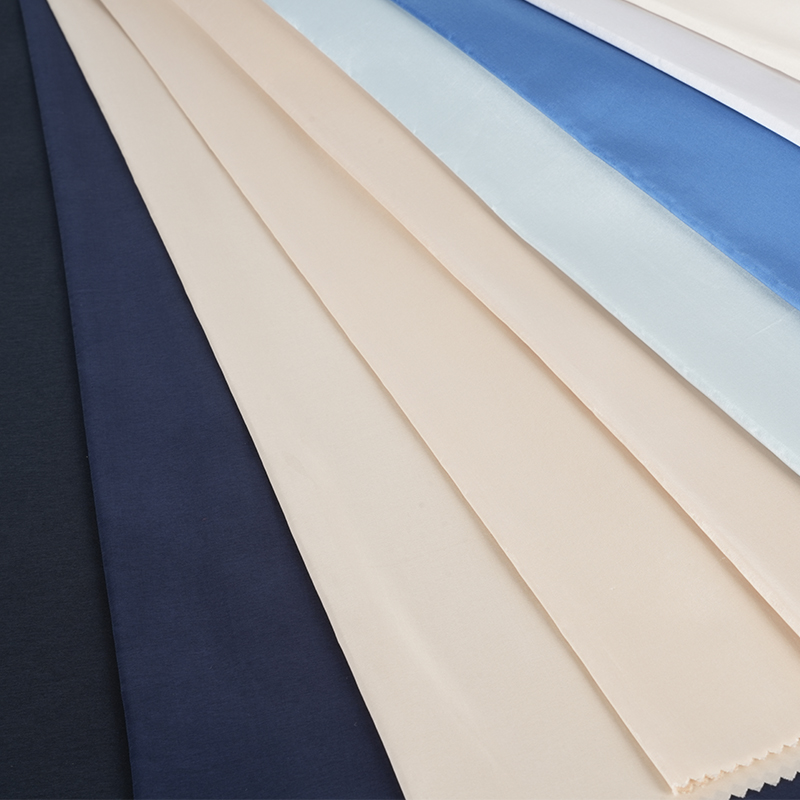
 Custom Pocket Lining Fabric for Inner PocketsOffered in stock neutral or dark shades or made-to-match dyeing, it helps align pocketing with outer shells and reduces colour bleed risk.View Product →
It is normally bought either as a stock construction in neutral or dark shades, or as a made-to-match cloth dyed close to the shell. Made-to-match adds a dyeing step and lead time, and removes the risk of a pale bag showing through a light shell or a dark one bleeding onto it.
Six Specifications That Decide Whether a Pocket Bag Survives
If a purchase order lists only composition and weight, the mill still has room to move. These are the numbers that close that room.
- Abrasion resistance. Martindale rub counts separate fashion pocketing from workwear: roughly 8,000 to 12,000 rubs for lightweight fashion trousers, 20,000 to 30,000 or more for denim, uniforms and workwear. State whether failure means a hole or two broken threads, since the two definitions differ by thousands of rubs.
- Tear strength. Pockets are loaded, not only rubbed. Elmendorf tear values around 10 N or more in both directions keep a bag from splitting under a phone or a tool.
- Weight and cover factor. Two fabrics at 120 g/m² can behave completely differently when one is built from coarse yarns at low density and the other from finer yarns at high density.
- Shrinkage. More than 3% after three home launderings distorts the bag and pulls the pocket mouth out of line. Wash-and-wear programs should ask for 2% or less.
- Colorfastness. Dark pocketing against a pale shell is the classic complaint. Rub fastness of 4 dry and 3 to 4 wet, with wash and perspiration fastness of 4, covers most retail requirements.
- Seam slippage. A slick, open weave can pull apart at the bag seam even when the yarn itself is strong, so ask for the yarn-slippage value at a defined load.
The chart is an order-of-magnitude comparison for early selection, not a test result. Only a lab report on the shipped lot is evidence a buyer can hold a supplier to.
Fiber and Construction: What Each Option Gives You
There is no single best pocketing. The right answer follows the care label, the price point and how the pocket is loaded.
| Fiber or blend | Strengths | Limits | Typical use |
|---|---|---|---|
| Cotton, tight twill or silesia | Breathable, dyes well, good tear strength | Slower drying, shrinks, lower abrasion | Tailored trousers, chinos, heritage menswear |
| Poly-cotton 65/35 or 80/20 | Better abrasion and stability than cotton at moderate cost | Drier hand, pills with cheap yarns | Volume trousers, uniforms, workwear |
| Polyester filament | High abrasion resistance, low shrinkage, easy dyeing | Slick and hot in dry climates, static | Denim pockets, casual trousers, bags |
| Nylon (polyamide) | Best abrasion and tear at low weight | Higher cost, more stretch, can yellow | Performance and outdoor garments |
| Viscose or rayon | Soft, quiet hand, good drape | Weaker when wet, poorer abrasion | Better tailoring with light pocket loads |
| Tencel (lyocell) | Smooth, strong when wet, low shrinkage | Premium price, fewer stock shades | Premium casualwear and eco ranges |
A 150 g/m² cotton twill and an 80 g/m² polyester taffeta can both be called pocketing and both pass a casual inspection, yet they are not interchangeable. The twill resists tear and seam slippage; the lighter taffeta resists abrasion per unit of weight and dries faster.
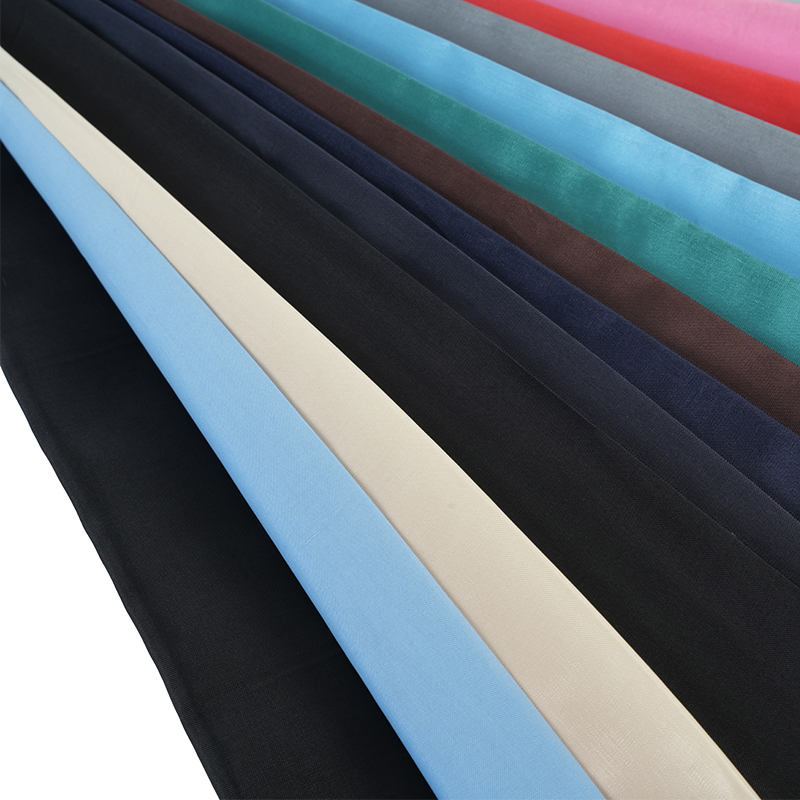
 90 GSM Polyester Pocket Cloth Fabric for LiningsA lightweight 100% polyester pocketing at 90 GSM, suitable for pocket linings and garments needing wrinkle, fade, and shrink resistance through repeated washing.View Product →
Spun polyester and poly-cotton pocket cloths sit in the middle of that range and cover most orders, holding their shape through repeated washing and dyeing well without a premium charge.
Weave and Density: Where Specifications Are Quietly Lost
Two pocketing fabrics with identical fiber content and identical weight can still fail differently, because the variable is how the yarns interlace.
Plain weave gives a firm, flat, low-cost surface and is the default for lightweight taffeta pocketing. A 2/1 twill places more yarn on the surface, raising abrasion resistance and reducing seam slippage at the bag bottom, which is why tight twill became the menswear standard. Ripstop adds coarse crosshatch yarns at intervals to stop a tear from running, an inexpensive upgrade for workwear.
Density labels confuse buyers more than anything else on a spec sheet. The "T" figure used for filament fabrics describes greige threads per inch, not finished weight, and it is not comparable between mills. For spun pocketing, ask for yarn count, ends and picks per inch, and finished weight as one package, because a mill can hit the weight while quietly lowering pick density. The same reasoning runs through our note on plain lining versus twill lining.
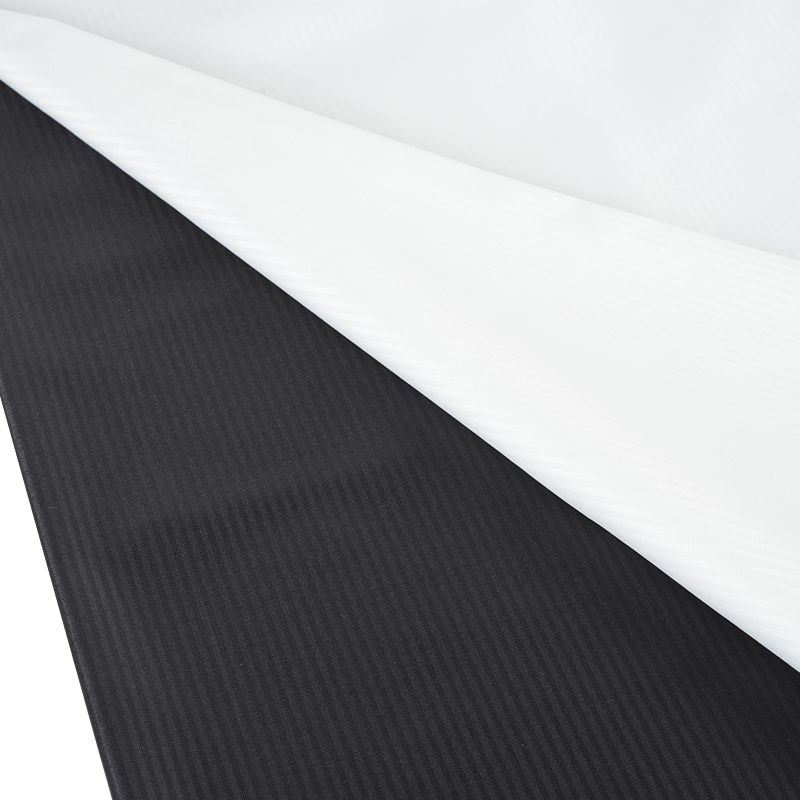 Yarn-Dyed Jacquard Striped Polyester Pocket FabricA 70 GSM yarn-dyed jacquard striped pocketing with soft sheen, suited to visible denim pocket bags and applications where stripe colourfastness matters.View Product →
Woven stripe and check pocketings are a separate category, used mainly in denim where the bag is visible when the waistband turns back. Colorfastness requirements tighten there, because the stripe sits against pale pocket bags and lining tape in the same construction.
Writing Pocket Lining Fabric Into a Purchase Order
A workable pocketing line on a purchase order carries four columns: parameter, target, tolerance and test method. The table below is a realistic starting point for a mid-weight poly-cotton pocketing in a trouser program.
| Parameter | Target | Tolerance | Test method |
|---|---|---|---|
| Composition | 65% polyester, 35% cotton | ±3 percentage points | Lab fiber analysis |
| Finished weight | 120 g/m² | ±5% | ISO 3801 |
| Weave | 2/1 twill | No substitution | Approved swatch |
| Abrasion | 20,000 rubs | Minimum, no hole | Martindale, ISO 12947 |
| Shrinkage | 2% warp and weft | Maximum after 3 washes | ISO 6330 at 40 °C |
| Colorfastness to rubbing | 4 dry, 3 to 4 wet | Minimum | ISO 105-X12 |
| Seam slippage | 4 mm at 120 N | Maximum 6 mm | ISO 13936-2 |
| Width | 150 cm usable | ±2 cm | Measured on relaxed roll |
| Roll length | 100 m | ±1% | Roll ticket |
Two notes. State the wash condition used for shrinkage and colorfastness, since a 30 °C gentle cycle and a 60 °C wash produce very different numbers. And attach a signed swatch, because a paragraph of text cannot settle a shade dispute, while a retained standard can.
Failure Modes and the Checks That Catch Them
Most pocket complaints trace back to one of six causes, all of which a wash test plus a physical inspection can catch before shipment.
- Thinning and shine at the bag bottom. Abrasion failure from low yarn tenacity, low pick density or both. Compare a washed sample against the approved standard on a light box and watch for surface sheen changing before the fabric breaks.
- Seam slippage at the bottom seam. Strong yarns, too open a weave. Pull the seam by hand and re-check the slippage figure.
- Color transfer to the shell. Crocking or wet migration from dark pocketing. Test a dark sample against pale cloth under damp heat, which is closer to wearing conditions than a dry rub.
- Distortion after washing. Differential shrinkage or residual skew. Measure the pocket mouth after three washes, not the flat piece.
- Pilling and fuzz. Short-staple spun yarns shedding onto keys and screens. A pill test after laundering shows it early.
- Shade variation between lots. The most common repeat-order complaint. Retain a standard from the approved lot and dye against it, not against a lab dip.
Sourcing: Samples, Lots and Lead Times
Because pocketing is a low-price line, the sourcing mistakes are predictable. Buyers approve a swatch and then accept a bulk lot that matches on weight but not on hand, or split an order across two dye lots to hit a delivery date and end up with a shade break inside one production run.
Three habits reduce most of that risk: approve a washed sample rather than a flat swatch so shrinkage and surface change are visible, test pocketing and shell under the same wash conditions, and keep a test report per lot on file, because it is the document that settles a claim.
Stock pocketing in neutral and dark shades can usually ship within days, while made-to-match dyeing, printing or a special finish adds weeks and a minimum order quantity. Pocketing is one line inside a broader range at Shaoxing Yongjun Textile, a woven lining mill in the Keqiao district of Shaoxing that has produced plain, twill, dobby and jacquard linings in polyester, poly-cotton, viscose, acetate and blends since 2003. Raising the specification early in development costs far less than raising it after a claim arrives.
Pocket lining fabric is rarely the most expensive line on a bill of materials and rarely the one a buyer studies. It is the part of the garment a customer touches every time it is worn, and the first thing to show wear on a hard-used pair of trousers. Fix the fiber, the weave density and the abrasion standard before the order goes out, test the lot rather than the swatch, and the pocket bag stops being a risk and becomes what it should be: a detail nobody ever thinks about.


 +86-81163100 / +86-13957571090

 Room B12148, Wanguo Center, No. 1388, Jinkeqiao Avenue, Keqiao, Shaoxing, Zhejiang, China
