
 English
 中文简体
Three rolls of the same dobby lining article land in the cutting room, and only one of them lines up with the pattern position of the sealed swatch. Nothing is technically defective. The loom simply did what it was set to do, and nobody wrote down what "set" meant. That single gap between a swatch and a purchase order is where most dobby lining problems start.
So here is the conclusion first: dobby lining is the practical middle ground between a flat taffeta and a jacquard. It puts visible texture on the inside of a garment — a fine diamond, a square dot, a water ripple — at a tooling cost and lead time well below jacquard, because the motif is built from a limited number of harness frames instead of individually controlled warp ends. The trade-off is equally simple. Repeat size, pattern alignment, shade between lots and skew after finishing all have to be agreed in writing before the loom is tied up, because none of them can be corrected later at the cutting table.
What Dobby Lining Actually Is
A dobby head sits above the loom and lifts groups of heald frames in sequence, one combination per pick. Most dobby shedding systems work with something in the region of 16 to 32 frames, which is why the resulting motifs stay small: dots, diamonds, herringbone, arrow stripes, ripple effects, sesame grids. A repeat that runs from a few millimetres to roughly two centimetres covers almost everything you will find in a lining catalogue.
That mechanical limit is the whole story. A jacquard controls every single warp end, so it can produce a 15 cm leopard motif or a floral panel with no repeat constraint at all — and it charges for the privilege through design files, harness setup and slower running speeds. A plain weave uses the simplest possible shedding and produces no pattern. Dobby sits between the two, which is exactly why it accounts for so much of the textured lining sold into tailoring.
In lining terms, dobby fabric usually runs 70–110 gsm on a polyester filament base of 75D to 150D, sometimes blended with viscose for a softer hand. For a deeper technical walkthrough of how the weave structure is built, the mill's own guide to dobby lining weave structure and sourcing choices covers the shed sequence in more detail than a purchase order ever will.
Why the Texture Earns Its Place in a Garment
If the inside of the garment is going to be seen — an unbuttoned jacket, a rolled sleeve, a low-backed dress, a coat thrown open on a shop floor — dobby earns its modest premium over plain taffeta. If the lining will never be visible, plain taffeta or pongee does the same functional job for less money and with fewer quality risks. Lining has three jobs: reduce friction between garment and body, hide construction and seam allowances, and add a little body to the shell. Only the second job benefits from pattern.
| Attribute | Plain (taffeta / pongee) | Dobby | Jacquard |
|---|---|---|---|
| Surface | Flat, dry or glossy | Small geometric texture, tight repeat | Large motifs, florals, animal prints |
| Loom setup | Minimal | Limited heald frames, low design cost | Individually controlled ends, design file plus high setup |
| Typical weight | 55–80 gsm | 70–110 gsm | 90–140 gsm |
| Relative price index | 1.00 | 1.05–1.15 | 1.30–2.00 |
| Main buying risk | Slippage, surface shine | Pattern skew, shade drift between lots | Cost, lead time, pattern distortion |
| Best suited to | Linings rarely seen | Suits, coats, open-back dresses | Statement linings, premium outerwear |
Inside the Dobby Family You Will Actually Be Quoted
Two base constructions cover most enquiries. Poly dobby is 100% polyester filament, usually 75D or 100D, and it is the workhorse: stable, cheap to dye, predictable shrinkage. Within it, cationic polyester is worth understanding. Cationic yarn takes disperse dye differently from regular polyester, so a single dyebath produces a two-tone effect — the ripple or diamond appears slightly deeper than the ground. That is a design feature, but it also amplifies lot-to-lot shade variation, so ask for lot-matched dyeing rather than assuming it.
PV dobby blends polyester with viscose, typically in the 65/35 to 80/20 range. The viscose softens the hand and improves drape, which matters for dresses and unlined-feel jackets, but it also means more moisture movement during finishing. Specify shrinkage tolerances on PV articles rather than carrying over the numbers from a polyester article.
- Dobby lining brief
- 100% polyester base
- Cationic yarn added — two-tone water ripple, diamond, copper plate; confirm lot shade
- Flat filament only — square dot, sesame grid, arrow stripe; lowest cost, most stable
- Poly/viscose base
- Softer drape — skirts, dresses, soft tailoring; check shrinkage movement
- Performance add-on
- Spandex weft — stretch linings for close-fitting garments
- Coating or higher density — outerwear, bags, pocketing
- 100% polyester base
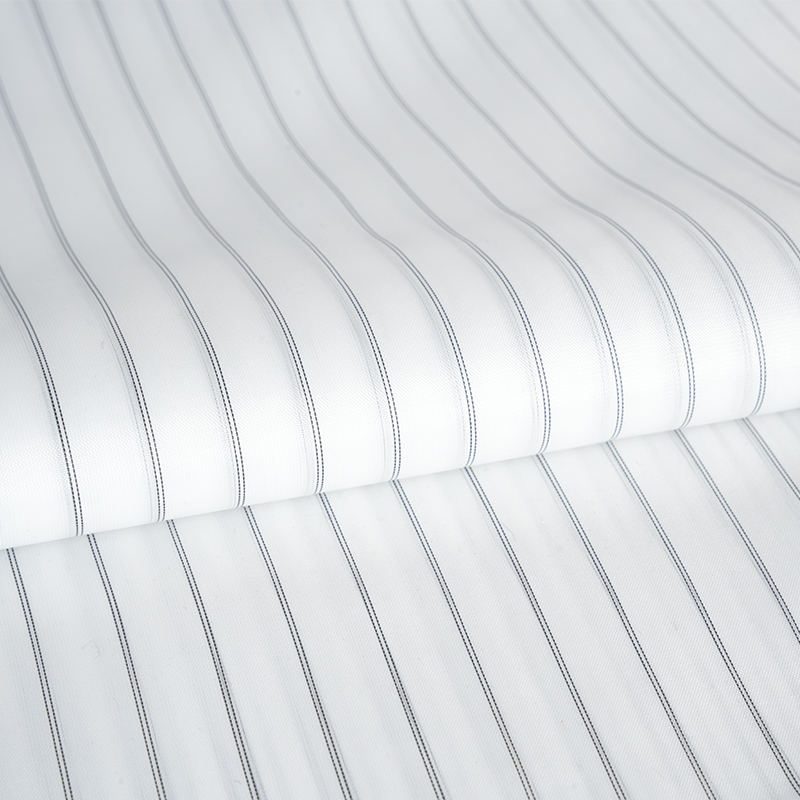
A typical cationic ripple article shows how the two-tone logic works in practice: the wavy ground reads as a subtle stripe from a metre away and as a fine texture up close, which is exactly the balance most tailored linings are looking for.
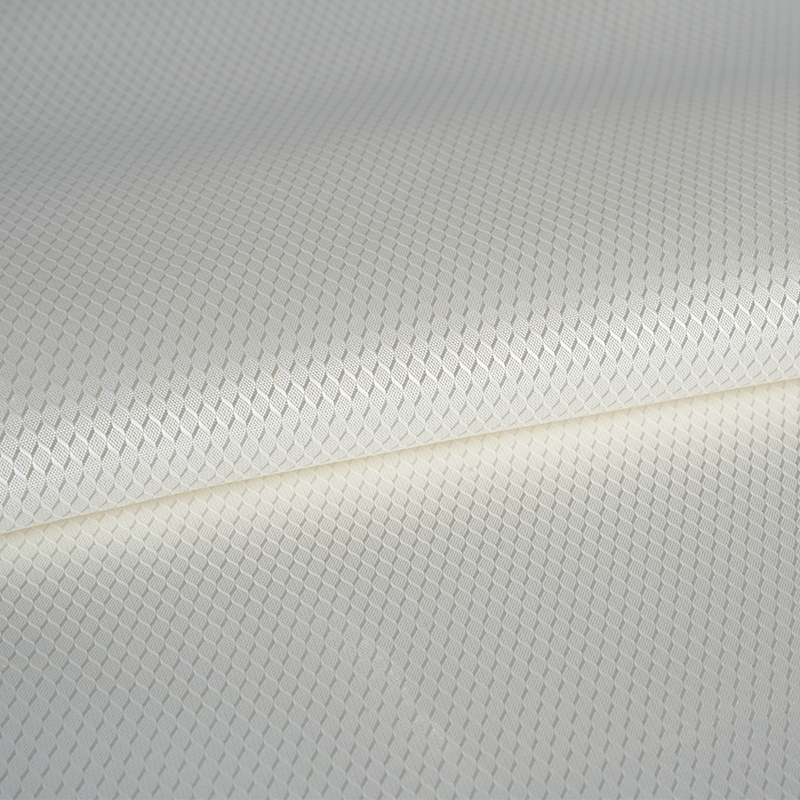 Polyester Cationic Water Ripple Lining Fabric YP12053A 100% polyester water-ripple lining with cationic dyeing, suited to suits, coats and down jackets where subtle texture and color depth matter.View Product →
The Numbers That Decide Pass or Fail
Weight is the first filter, because it determines whether the lining adds body or drags the shell down. The chart below shows the bands buyers usually work within; treat them as starting points, not specifications, since density and finishing shift the figure by several grams either way.
Typical weight bands by lining family (gsm)
Taffeta 190T55–65
Pongee 210T65–80
Poly dobby75–100
PV dobby85–110
Twill lining95–125
Jacquard lining105–140
Beyond weight, six lines on a tech sheet prevent most arguments later:
- Composition with a tolerance, usually ±3%, so a 65/35 PV cannot arrive as 70/30 without discussion.
- Yarn count and density written together, for example 75D × 75D at 210T, because either number alone can be met while the other drifts.
- Weight in gsm with ±5% tolerance, measured on finished, relaxed fabric rather than greige.
- Shrinkage after washing and pressing, commonly held to around 3% in warp and weft for polyester dobby.
- Skew and bowing limits, often 3% or tighter, measured on the roll rather than on a hand-cut swatch.
- Colourfastness to rubbing of grade 3–4 or better and to washing of grade 4, plus pH 4.0–7.5 where the lining contacts skin.
Where Dobby Lining Goes Wrong in Production
Four failures account for most claims, and each one is cheaper to prevent than to settle:
- Skew after heat setting. The pattern looks straight on the swatch and runs diagonally on the roll, so panels are cut off-grain and the finished garment twists in wear. Measure skew on the full width, not on a 20 cm sample.
- Shade drift between dye lots. Cationic yarns make this more visible because the contrast effect shifts with dye uptake. Ask for lot-matched dyeing and keep a retained sample from each lot.
- Shrinkage after fusing. A low-density dobby at 80 gsm moves more under a press than a dense taffeta, and the shell puckers along the front edge. Run a fusing trial at the actual press temperature before bulk cutting.
- Seam slippage on loose constructions. Fine for high-density dobby, riskier at low pick counts around armholes and side seams. A seam strength test on the actual article settles it in an afternoon.
Matching the Lining to the Garment
The article choice usually follows the shell, not the other way round. A men's suit jacket sits comfortably with a 75–100 gsm polyester dobby in a square dot or herringbone; an overcoat wants 100–130 gsm and a tighter construction so the lining does not collapse under its own weight. Dresses and skirts with a visible lining read better in PV dobby, where the viscose content gives the softer movement the garment needs. Stretch shells call for a dobby with a spandex weft, and bags or outerwear take a higher-density or coated dobby where abrasion resistance matters more than drape.
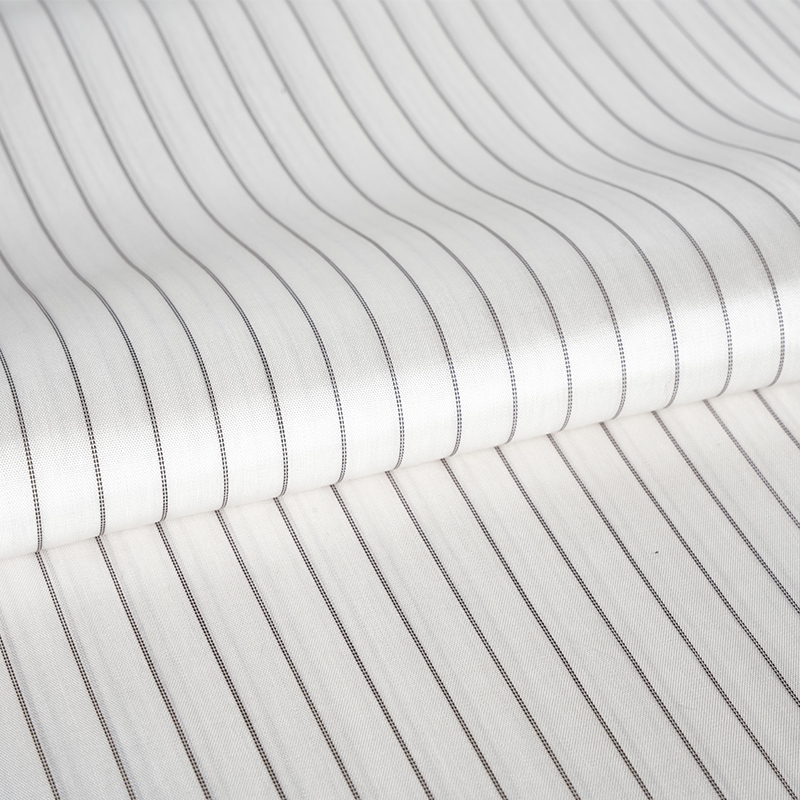
For softer women's tailoring, a PV diamond small jacquard is a sensible reference point: the motif is small enough to stay quiet under a light shell, and the viscose content keeps the hand from feeling papery.
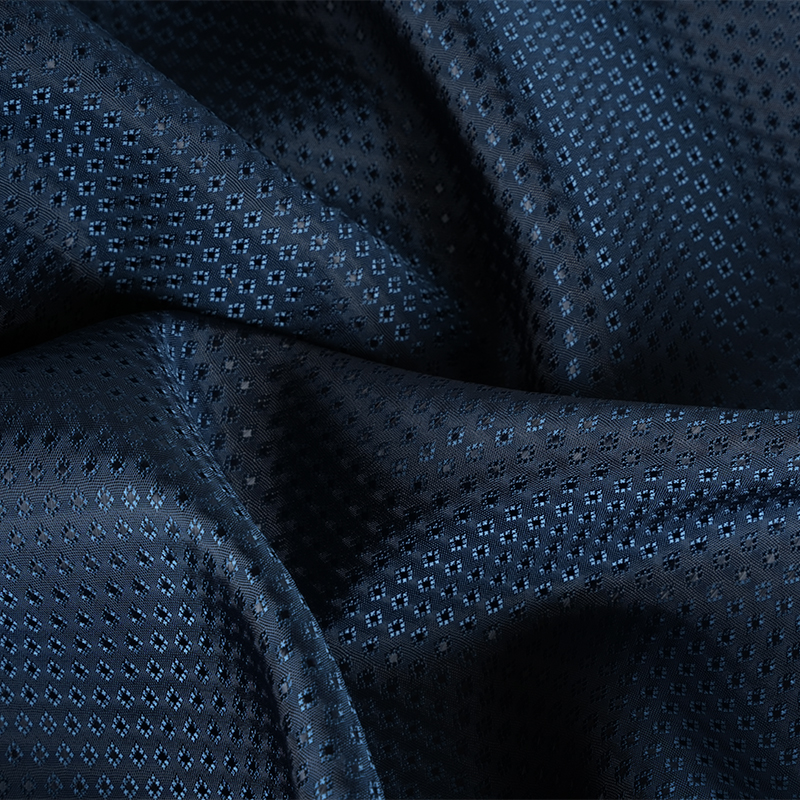 PV Diamond Small Jacquard Fabric PV22688A soft 52% polyester/48% viscose small-diamond jacquard for women’s tailoring, with a quiet motif and drape suited to light shells.View Product →
Sourcing Practice That Saves a Season
Ask for the article number, the construction and the finishing route in one document, then seal a sample against it. Mills that run both dobby and jacquard will usually tell you honestly which one suits a brief, because pushing a jacquard harness for a 5 mm diamond wastes their loom time as much as your budget.
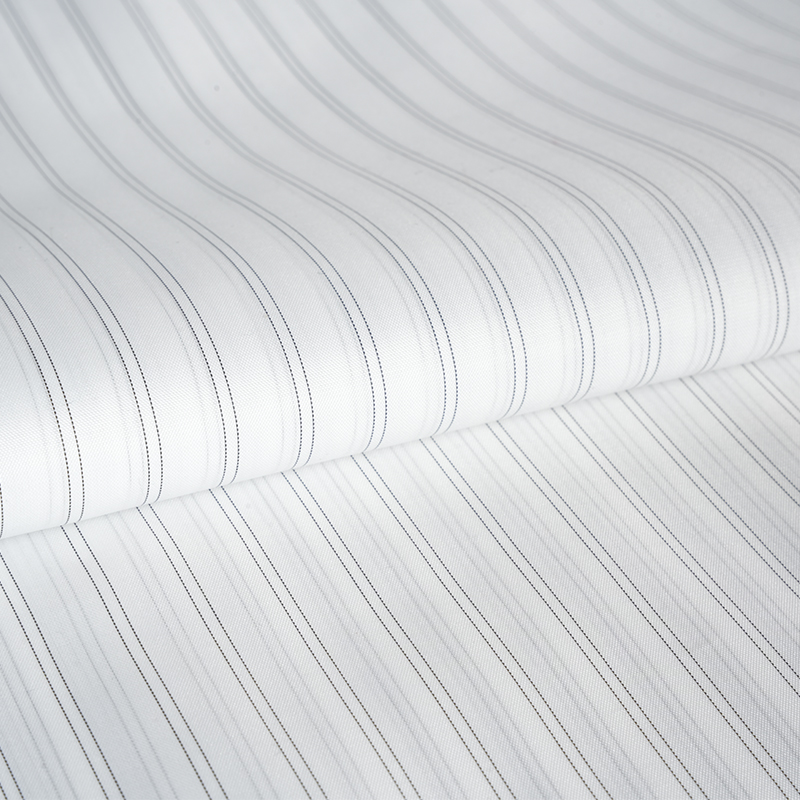
Directional patterns deserve a note of their own. An arrow or turned-stripe dobby reads as a subtle vertical line once it is cut and sewn, which is useful on skirts and long coat panels, but it also means every panel has to be cut in the same direction. Mark the cut plan before the fabric is spread.
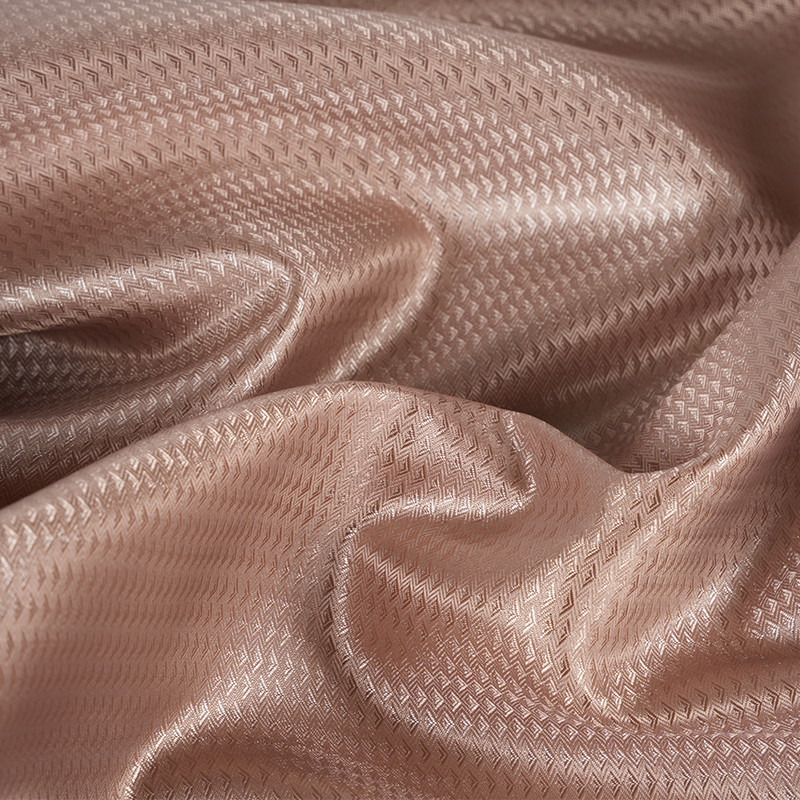 Polyester Arrow Flight Small Jacquard Lining P1216939A 100% polyester jacquard lining with a directional arrow motif, useful for structured garments that need a clear internal pattern and cut-plan attention.View Product →
On the supply side, it helps to know who is behind the loom. Shaoxing Yongjun Textile has been producing woven and knitted linings since 2003 from Keqiao, the Shaoxing textile market, and holds its own import and export licence — the company background and product range set out the dobby, jacquard, twill and high-quality lining lines it runs alongside its women's fabric and hijab programmes.
Dobby lining rewards buyers who treat the pattern as a specification rather than a decoration. Fix the repeat, the weight band, the shrinkage and skew limits, and the shade tolerance before the loom is set, and the fabric will do exactly what the swatch promised. Leave any of them to assumption, and the difference will show up three rolls into a cutting order — which is always the most expensive place to find it.


 +86-81163100 / +86-13957571090

 Room B12148, Wanguo Center, No. 1388, Jinkeqiao Avenue, Keqiao, Shaoxing, Zhejiang, China
