

 English
 中文简体

Dobby striped lining is a woven inner-garment fabric with a small, repeating stripe or geometric motif built into the weave. It is the right choice when you want a lining that looks orderly at the hem and inside edge, helps guide cutting and sewing, and adds a little surface texture without turning into a decorative outer fabric. The wrong choice is usually not the dobby itself; it is a vague specification that leaves fiber, repeat size, shrinkage and friction to the mill.
Start with three decisions: base fiber, stripe scale and finish. Those determine hand feel, durability, cost and how much care the lining needs in cutting, pressing and sewing.
What Dobby Striped Lining Actually Is
Dobby is a shedding mechanism, not a fiber. A dobby loom can lift small groups of warp yarns to create a pattern without the larger setup cost of a jacquard loom. The stripe may run warp-wise, weft-wise or as a broken geometric repeat. In lining, the pattern is usually low-contrast and small-scale because the fabric sits against the body and under the shell.
For buyers, the practical distinction is between a true woven dobby stripe and a printed stripe. A woven stripe is part of the cloth structure; it will not wash off or crack in the same way as a print. It also changes surface friction and drape. A print may be cheaper and faster, but it is a different product with different risks.
Common dobby striped lining bases include polyester, poly-viscose and viscose-rich blends. Polyester gives strength and cost control. Viscose improves drape and a cooler hand feel. Blends are common because they balance the two.
Why the Stripe Matters Inside a Garment
The stripe is a functional detail, not just a visual one. It helps the cutter keep panels aligned, gives the sewer a reference line for grain and seam direction, and creates a more intentional interior finish when a jacket or coat is open.
In bespoke and better ready-to-wear, lining is often cut on the same grain as the shell. A clear but subtle stripe makes it easier to check whether the lining has been cut off-grain. It also helps when matching left and right fronts, sleeves and back panels. The effect is practical: fewer twisted panels, fewer puckered seams and a cleaner hang.
Stripe scale matters. A very fine stripe reads as texture from a distance; a wider stripe is more visible at the hem and cuff. For lightweight shell fabrics, keep the pattern low-contrast and check for show-through under strong light. For coats and suiting, a slightly stronger dobby stripe can add structure without competing with the outer cloth.
Weave Mechanics Buyers Should Ask About
The first question is not “What is the pattern?” but “What is the repeat and float length?” Dobby patterning is made by controlling groups of warp yarns. Long floats can feel rougher and can snag more easily; short floats give a flatter, more stable surface. Ask for the repeat width, the number of ends and picks, the greige width and the finished width.
Density control is the second question. A tight construction gives better seam strength and less pattern distortion, but it can also make the lining stiffer. A looser construction drapes more but may be more prone to seam slippage. The right balance depends on the garment: a tailored jacket needs more stability than a soft skirt lining.
Also confirm the finishing route. Heat setting, washing, decatizing and calendar finishing can change shrinkage, hand feel and pattern clarity. If the mill shows a sample before finishing, ask for the finished-state sample as well. The difference is often small on paper and obvious on the cutting table.
Fiber Choice and Performance Trade-offs
Polyester is the workhorse for dobby striped lining; poly-viscose is the upgrade when drape and hand feel matter; viscose-rich versions need more care in washing and pressing. The right choice depends on the garment price point, wear cycle and care label.
| Base fiber | Hand feel | Durability | Care and sourcing note | Best fit |
|---|---|---|---|---|
| Polyester | Dry, crisp to smooth | High strength and abrasion resistance | Low moisture regain; watch static and heat setting | Suits, coats, uniforms, value programs |
| Poly-viscose | Softer, more drape | Good balance of strength and hand feel | Confirm shrinkage and pressing behavior | Jackets, dresses, better separates |
| Viscose-rich | Cool, fluid, premium | Lower wet strength; needs careful finishing | Higher care risk; test wash and dry-clean | Soft tailoring, premium linings |
Use the table as a starting point, not a substitute for a wear trial. A lining that feels good in the sample room can still fail at the seam if the yarn is too smooth or the construction is too loose.
Friction, Abrasion and Garment Longevity
Lining rubs against the shell, the pocket bag and the body. That friction affects comfort, noise, wear and how easily the garment slides on and off. A dobby stripe changes the surface geometry: raised areas of the pattern contact the shell first, while recessed areas carry less load. If the floats are long or the yarn is spun, the lining can abrade more than a flat filament taffeta.
This chart is a planning aid, not a test result. Confirm friction with abrasion, seam-slippage and pilling tests on the finished fabric. For coats, add a rub test against the actual shell fabric, because some wool and tweed shells are far more abrasive than a standard test cloth.
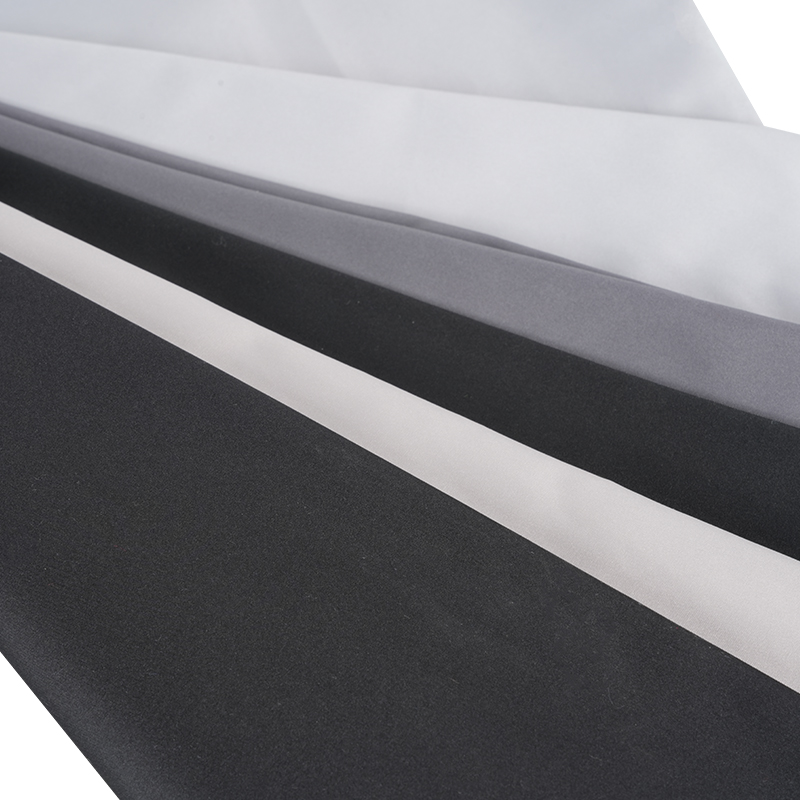
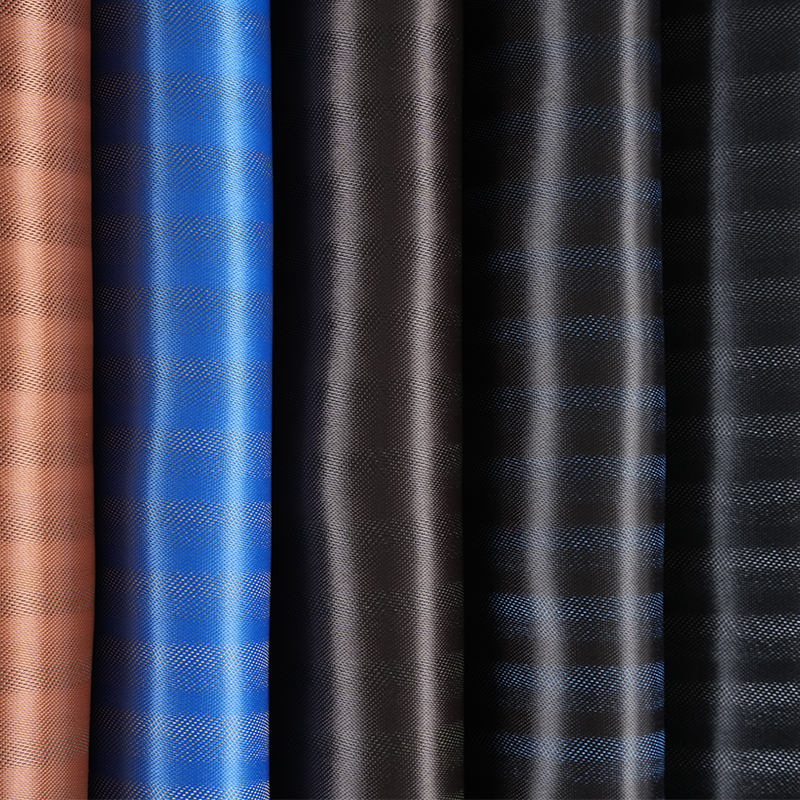 PV Satin Hidden Stripe Lining FabricA 52/48 poly-viscose satin with subtle hidden stripe and smooth drape, worth considering as a middle-ground lining option.View Product →
A hidden-stripe PV satin is a useful example of the middle ground: the stripe is subtle, the surface is smoother than a coarse dobby, and the poly-viscose base gives more drape than all-polyester taffeta. It is not the right answer for every program, but it shows why fiber and weave should be selected together.
Tailoring Integration and Quality Control
Cutting and grain alignment
Cut all lining panels in the same direction. If the stripe is directional, mark it clearly on the pattern and on the roll. Allow the fabric to relax before cutting, especially viscose blends. A small relaxation step prevents a common problem: the lining looks correct on the cut table and twists after the garment is pressed.
Stitching and ease
Use a fine needle and balanced tension to avoid puckering along the stripe. Build an ease pleat at the back shoulder or center back so the lining can move with the shell. If the lining is cut too tight, the stripe will distort at the armhole and the garment will feel restricted.
Inspection checks
- Shade consistency across rolls and within the same dye lot.
- Stripe repeat alignment at the selvage and across the width.
- Finished shrinkage after the agreed wash or dry-clean cycle.
- Colorfastness to rubbing, water and perspiration.
- Seam slippage at the armhole, side seam and hem.
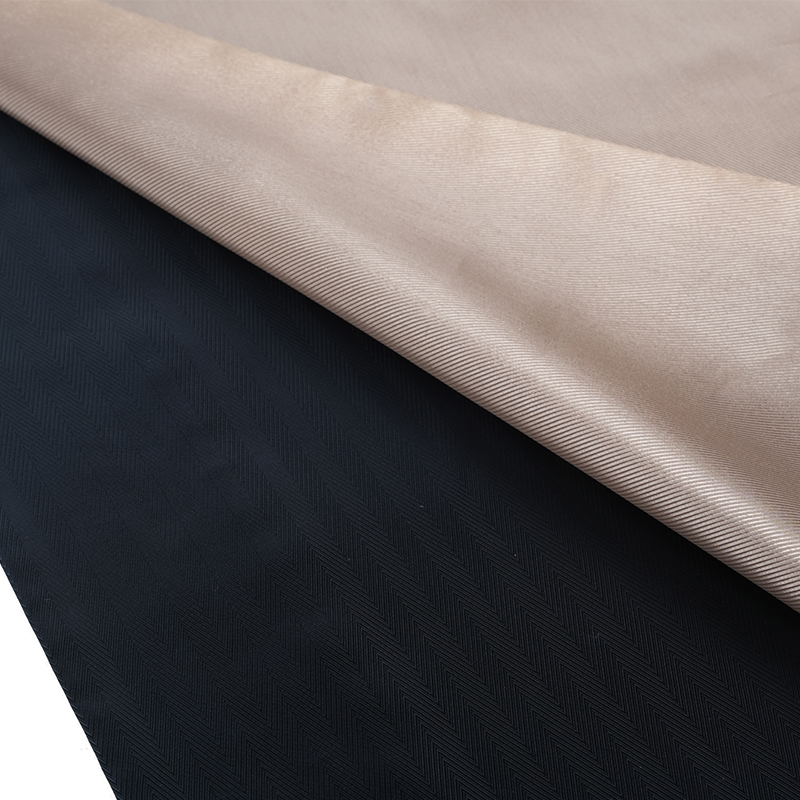
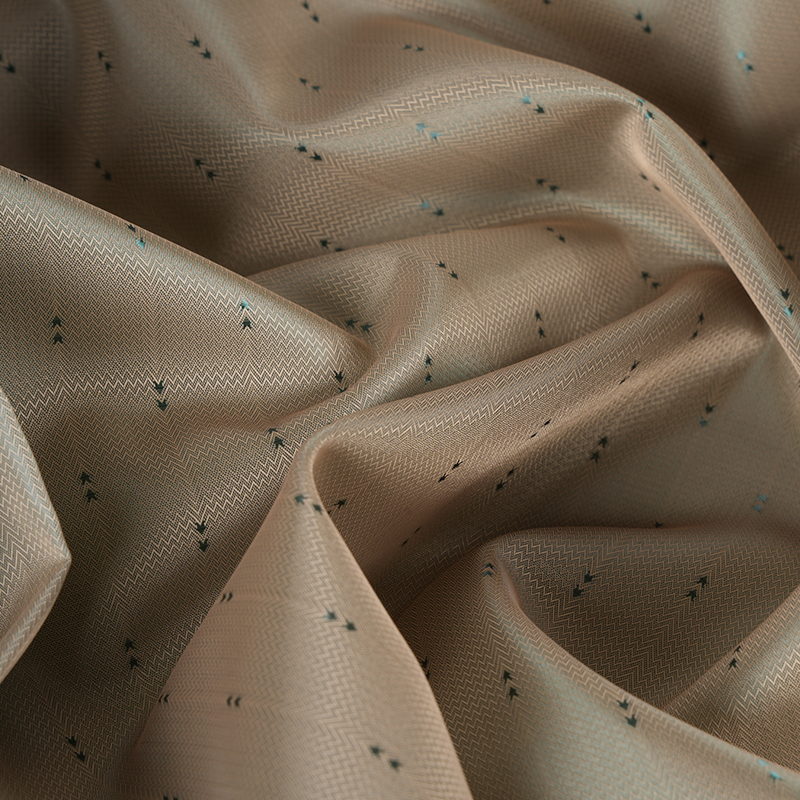 Corrugated Arrow Stripe Jacquard LiningA textured polyester jacquard lining with a wavy arrow stripe, visually active enough to require careful repeat inspection across the roll.View Product →
An arrow-stripe or corrugated dobby is more visually active than a simple line. That can be an advantage in an unlined or partially lined garment, but it also raises the bar for pattern matching. Inspect the repeat across the full roll, not just a hand sample.
Procurement Risks and a Practical Sourcing Checklist
Most problems with dobby striped lining come from loose specifications, not from the weave itself. The common risks are pattern drift, shade variation between rolls, shrinkage outside tolerance, a hand feel that is too stiff or too slick, and a lead time that was never confirmed against the trim and cut schedule.
- Define the base fiber and blend percentage, not just “polyester” or “viscose.”
- Specify the stripe repeat, direction and acceptable tolerance at the seam.
- Set shrinkage and colorfastness limits for the finished fabric.
- Confirm hand feel with a finished sample, not a greige sample.
- Agree on roll length, shade sorting and packaging before bulk.
- Check minimum order quantity, lead time and replenishment lead time.
For a program with more than one color, ask for a color continuity plan. Dobby stripes can hide small shade differences, but they can also exaggerate them at the seam. A shade band and a roll-to-roll check are simple controls that prevent a late-stage problem. You can review our company profile and factory information for context on how we organize lining production and finishing.
Bottom Line
Dobby striped lining is a small component with an outsized effect on how a garment cuts, sews, wears and feels. Specify the weave and fiber together, test the finished fabric against the actual shell, and treat the stripe as a functional alignment aid rather than a decorative extra. When the specification is clear, the lining disappears into the garment in the best way: it adds order, comfort and longevity without calling attention to itself.


 +86-81163100 / +86-13957571090

 Room B12148, Wanguo Center, No. 1388, Jinkeqiao Avenue, Keqiao, Shaoxing, Zhejiang, China
