
 English
 中文简体
A buyer approves a 190T pongee in bright 75D polyester, signs off the lab dip, and reorders three months later. The second lot feels softer, weighs a few grams more per square metre, and starts showing a faint shadow line through a light-coloured jacket shell. Nothing on the purchase order was technically wrong — it simply said "pongee lining, 190T, black".
That is the core difficulty with this fabric: pongee is a weave family, not a specification. Two mills can both ship "190T pongee" and hand you cloth that differs in yarn twist, sett, calendering and residual shrinkage. The practical fix is to stop buying by name and start buying by construction plus tolerance — T-count, yarn denier, GSM band, finish, and the numbers you will actually inspect against on arrival.
The sections below explain how pongee is built, what 190T, 210T, 230T and 300T really measure, where stretch and coated versions earn their extra cost, and which lines belong on a purchase order before the first bulk roll goes on the loom.
Pongee Is a Plain Weave, and That Explains Most of Its Behaviour
Pongee lining is a plain-weave fabric — one warp end over, one weft pick under — usually woven from polyester filament yarn in the 50D to 75D range, then dyed, heat-set and frequently calendered to close the surface. The plain interlacing is why the cloth is dimensionally stable, inexpensive to weave and consistent across large volumes: there are no long floats to snag on a sleeve board and no directional face to keep track of during cutting.
The name itself is a hand-me-down from wild-silk cloth; in the modern lining trade it has narrowed to mean a smooth, light, plain polyester lining, generally sold by T-count. Compared with twill, plain pongee has a flatter, more paper-like hand and less drape, but better stability and a lower cost per metre. If you are still deciding between weave families for a new style, this breakdown of durability and comfort in plain lining constructions is a sensible starting point.
Inside the "plain weave" box, three variables do most of the work. Yarn twist decides hand: full-twist yarn gives a drier, crisper, slightly rustly cloth, while no-twist or low-twist yarn gives a softer, limper lining that drapes with the shell. Sett decides density and therefore coverage and down-proofing. Finishing decides everything else — heat setting for shrinkage control, calendering for surface smoothness, and anti-static treatment if the garment will be worn in dry climates.
What 190T, 210T and 300T Actually Measure
The T number counts threads per inch in the greige. Most mills quote warp ends plus weft picks per square inch, but some quote ends and picks separately — clarify this in the first email, because a "300T" quoted as 150 ends plus 150 picks is a different cloth from a "300T" quoted as 300 threads per inch in one direction.
More importantly, T is a density figure, not a weight figure. A 190T woven from 75D yarn is heavier than a 190T woven from 50D, even though both carry the same number on the label. This is the single most common source of reorder disputes: the T-count matches, the GSM does not.
Practical consequence: higher T means a denser, smoother, less air-permeable cloth with better resistance to seam grin and better performance under fine print detail, but also a crisper hand and a higher price. For most jacket and suit linings, 190T to 210T is the working range. The 300T end of the market exists for tighter surfaces, better coverage over dark shells, and printed linings that must hold fine pattern edges.
Weave density by spec (threads per inch, greige)
190T
190
210T
210
230T
230
300T
300
Reading the chart: the density step from 190T to 210T is small enough that many buyers cannot feel it inside a finished garment, so paying a premium for 210T purely on hand feel is rarely justified. The step to 300T is visible and audible — a tighter, smoother surface that reflects light more evenly and shows fewer shadow lines through pale shells.
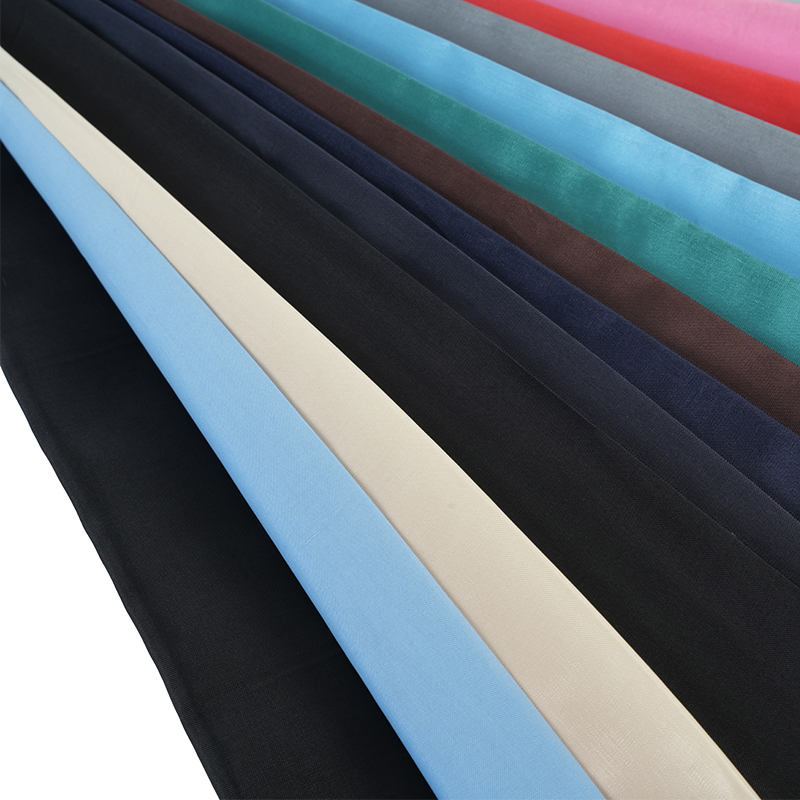
 190T Polyester Pongee Fabric for Lightweight LiningsThe lightest practical pongee option, a 60-63 GSM polyester at 150 cm width for dress and skirt linings where low bulk matters.View Product →
A 190T plain pongee is the lightest practical option in the family and the one most often specified for dress linings, skirt linings and sleeve heads where bulk matters more than body.
Matching Spec to Garment: A Comparison Table
| Spec | Indicative GSM | Hand feel | Typical use | Main risk |
|---|---|---|---|---|
| 190T | 55–65 | Light, dry, slightly papery | Dress and skirt linings, light jackets, sleeve lining | Shadowing through pale shells; seam grin at low sett |
| 210T | 65–75 | Balanced, smooth, moderate body | Blazers, suits, general outerwear | Shade consistency between dye lots |
| 230T | 75–85 | Denser, crisper | Structured jackets, printed linings | Too stiff for soft, fluid silhouettes |
| 300T | 95–110 | Tight, smooth, papery | Down jackets, heavy coats, fine prints | Rustle and reduced breathability |
| 225T stretch | 90–105 | Smooth with warp stretch | Slim-fit jackets, stretch shells, fitted dresses | Elastane heat sensitivity; recovery loss if over-set |
Two readings of this table matter in practice. First, GSM bands overlap between neighbouring specs, so a heavy 190T can sit inside a light 230T band — which is why weight must be specified separately. Second, the "main risk" column is where most claims originate, and each risk has a cheap test: a light-box check for shadowing, a retained sealed sample for shade, a hand-feel panel for drape.
Stretch and Coated Variants
Stretch pongee changes the economics of fitted garments. A 225T poly/spandex plain weave adds warp stretch so the lining follows a slim jacket or a stretch shell without pulling at the armhole or popping a seam at the shoulder blade. It costs more per metre and needs a gentler heat-setting profile to protect the elastane, but it removes the most common womenswear complaint: a lining that fights the outer fabric instead of moving with it.
 225T Poly Spandex Pongee for Fitted GarmentsA 96% polyester / 4% spandex pongee with warp stretch, aimed at linings that move with slim jackets and stretch shells.View Product →
Coated pongee — PU or acrylic back-coating, sometimes with an additional water-repellent finish — belongs to down jackets, padded coats and low-cost wind shells. Be precise about what the coating buys: it blocks down leakage and adds water resistance, but it also cuts air permeability and makes the lining feel warmer and less breathable against the body. A coated pongee is not a membrane and should never be specified as a substitute for one.
 300T Polyester Pongee Fabric for Coated ApplicationsA 65 GSM, 150 cm polyester pongee with a tight 300T weave, positioned as a base for coatings that need a smooth surface.View Product →
A 300T base is the usual starting point when the coating has to sit on a very tight surface, because a loose sett lets the coating strike through and stiffen the hand unevenly.
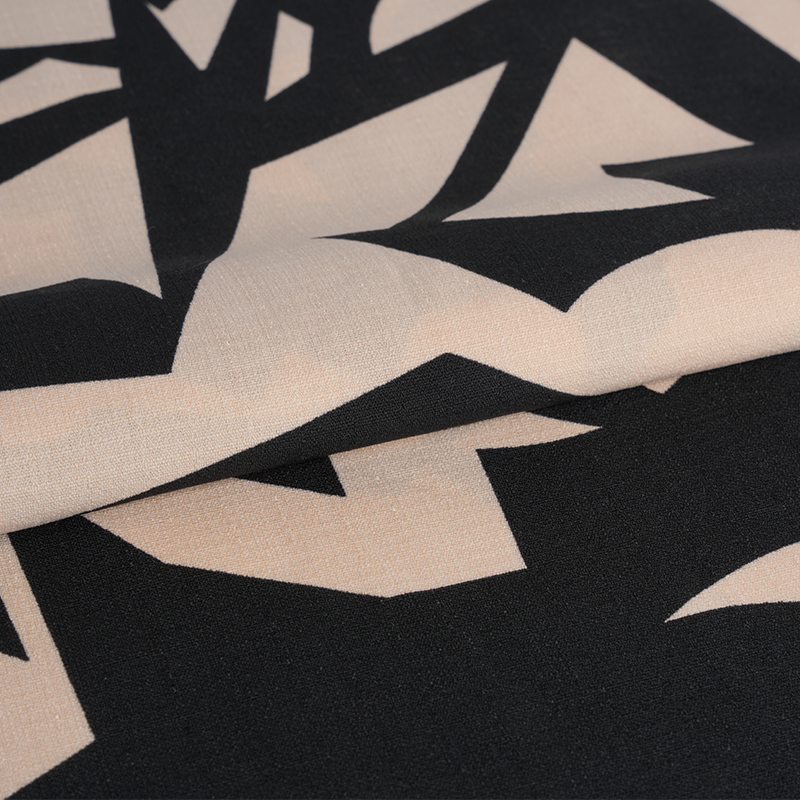
Printed pongee is the third variant worth knowing. Fine leopard, floral and geometric prints hold their edges better on 230T and above, while 190T printing is usually chosen for childrenswear and low-cost fashion linings where pattern sharpness is secondary to price.
What Belongs on the Purchase Order
Most pongee disputes are not quality failures; they are specification gaps. These ten lines close the usual ones.
- Construction: plain weave, warp and weft yarn denier, and twist level (full twist, low twist or no twist).
- Density: T-count, plus a statement of whether it is ends plus picks per square inch or per linear inch.
- Weight: GSM with an explicit tolerance, typically plus or minus 5 percent.
- Width: cuttable width in centimetres, and whether selvedge is included.
- Shrinkage: limits after a stated wash cycle, for example 40 degrees Celsius, with separate warp and weft maximums.
- Colourfastness: to dry and wet rubbing, to washing, and to light — a grade of 4 or better on the grey scale is a normal apparel minimum.
- Physical performance: skew and bowing tolerance, seam slippage at a stated stitch density, and tear or tensile minimums if the shell is heavy.
- Finishing claims: anti-static, moisture-wicking, calendered, coated — each named with the test method, not just the claim.
- Colour standard: a sealed, retained sample plus an agreed light source such as D65 for shade assessment.
- Packing: roll length, roll put-up and lot marking so a dye lot can be traced back to cut panels.
Item nine causes more claims than the other nine combined. "Black" is not a colour standard; it is a direction. A sealed sample under an agreed light source turns a subjective argument about "too blue" or "too brown" into a measurable comparison, and it protects both sides when a repeat order lands a year later.
It also helps to know how the mill actually finishes the cloth, since calendering pressure and heat-setting temperature are what convert greige pongee into a stable lining. Buyers who want to see that stage before committing usually ask for a factory review first — the production and finishing overview is the place to start that conversation.
Where Pongee Fails, and How to Catch It Early
Five failures account for most pongee rejections, and all five are visible before cutting.
- Seam grin at low sett: hold the fabric against a light box after sewing a test seam in the intended shell colour. If the stitch line shadows through, move up a density step or increase stitch density.
- Bowing and skewing: unroll several metres on a flat table and check that weft lines stay square to the selvedge. Skewed pongee twists panels once cut, and the fault appears in the finished garment rather than in inspection.
- Dye lot drift: compare rolls from different lots side by side under the same lamp, never sequentially. Shade memory is unreliable after even a short break.
- Over-calendering: excessive pressure produces glazed, shiny patches that read as surface damage and can delaminate a coating. Check the face under raking light.
- Static in dry conditions: untreated pongee clings to itself and to the shell. If the garment will be sold in cold, dry markets, specify anti-static treatment rather than assuming it.
Pongee is one of the most forgiving linings to buy — cheap to weave, widely available, easy to dye — which is exactly why it is so often bought loosely. The buyers who avoid trouble treat the T number as a starting point rather than a specification, keep a sealed sample as the reference for both hand and shade, and put tolerances on the order instead of trusting the name on the label. Do that, and the second lot looks like the first.


 +86-81163100 / +86-13957571090

 Room B12148, Wanguo Center, No. 1388, Jinkeqiao Avenue, Keqiao, Shaoxing, Zhejiang, China
