

 English
 中文简体
中文简体
Understanding the Composition of Textured Satin Fabric
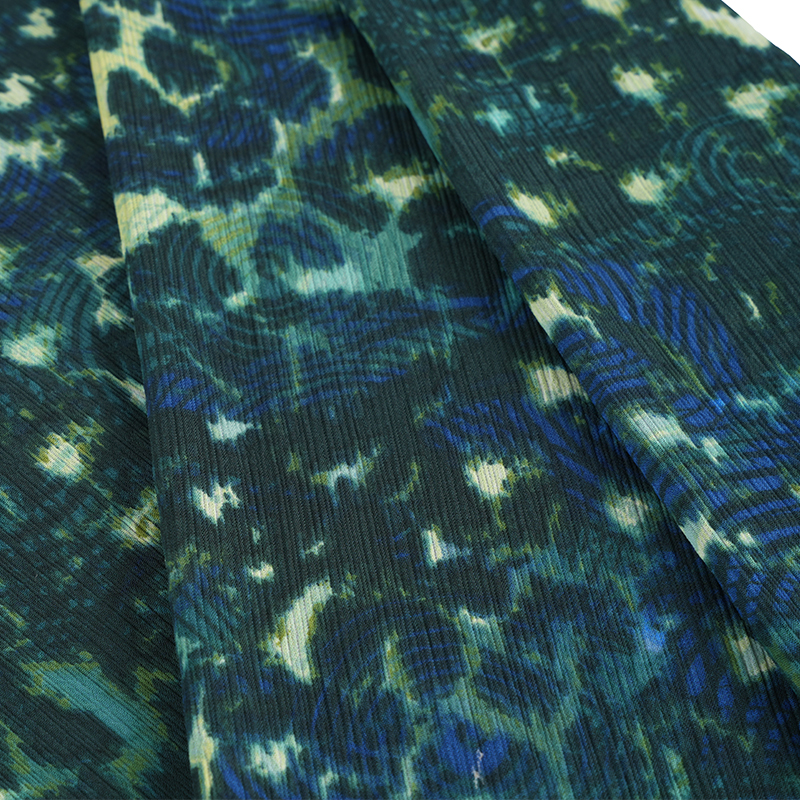
Textured satin fabric is characterized by its smooth surface sheen combined with a subtle three-dimensional structure that enhances visual depth and tactile variation. Unlike flat satin weaves, textured versions introduce surface irregularities through yarn manipulation, finishing techniques, or blended fiber construction. The core structure of satin is defined by its weave pattern, where warp or weft floats dominate the surface, creating a reflective appearance. Because the weave itself does not dictate fiber type, textured satin fabric can be produced from a range of materials, including polyester, silk, nylon, acetate, and various blended fibers. This structural flexibility opens the possibility for incorporating environmentally friendly recycled fibers into its production.
The compatibility of recycled content with satin weaving depends on yarn quality, tensile strength, and finishing requirements. Since satin relies on long floats to achieve luster, the fibers used must maintain smoothness and durability during weaving and finishing. As sustainability becomes increasingly relevant in textile manufacturing, producers are exploring recycled filament yarns that can replicate the appearance and drape associated with satin constructions.
The Role of Recycled Fibers in Modern Textile Manufacturing
Environmentally friendly recycled fibers are derived from post-consumer or post-industrial waste materials. Common examples include recycled polyester made from plastic bottles, regenerated nylon from discarded fishing nets, and mechanically recycled cellulose fibers. These fibers reduce reliance on virgin raw materials and contribute to lower resource consumption in textile supply chains. When applied to textured satin fabric, recycled fibers must undergo processing to achieve consistent filament length and surface smoothness.
Advances in polymer reprocessing and spinning technology have made it possible to create recycled filament yarns with properties suitable for satin weaving. Although recycled fibers may exhibit slight variations in uniformity compared to virgin materials, modern quality control systems help maintain performance standards required for apparel, home textiles, and decorative fabrics.
Compatibility of Satin Weave with Recycled Polyester
Recycled polyester is one of the most widely used sustainable fibers in satin textiles. Its filament structure supports the smooth floats necessary for luster development. In textured satin fabric, recycled polyester can be engineered into microfilament yarns that create soft drape and light-reflective surfaces. Texturizing techniques such as false-twist processing add bulk and elasticity, enabling the fabric to achieve depth while maintaining sheen.
Manufacturers often blend recycled polyester with elastane or other synthetic fibers to improve stretch performance. Dyeing behavior remains similar to conventional polyester satin, allowing designers to achieve vibrant or muted finishes depending on aesthetic goals. The incorporation of recycled polyester demonstrates that satin weave structures are not limited to virgin raw materials.
Application of Regenerated Nylon in Textured Satin Fabric
Regenerated nylon, produced from recovered industrial waste or marine plastics, also supports satin constructions. Nylon’s inherent strength and abrasion resistance make it suitable for applications requiring durability, such as linings, evening wear, or performance garments. In textured satin fabric, regenerated nylon filaments can create a balanced surface between gloss and structure.
While nylon tends to have a slightly different luster profile compared to polyester, finishing treatments can modify reflectivity. Heat-setting processes stabilize the fabric and reduce distortion during use. By selecting appropriate yarn denier and twist levels, manufacturers can adapt regenerated nylon to satin weaving without compromising structural integrity.
Considerations for Acetate Satin Fabric and Sustainability
Acetate satin fabric has long been valued for its silk-like sheen and fluid drape. Acetate fibers are derived from cellulose, typically sourced from wood pulp. Although acetate is semi-synthetic, its environmental profile depends on raw material sourcing and chemical processing methods. Traditional acetate production involves solvent systems that require careful management to reduce environmental impact.
Recent developments focus on responsibly sourced cellulose and closed-loop solvent recovery systems. While recycled acetate fiber options are less common than recycled polyester, some manufacturers explore blending recycled cellulose fibers with acetate satin fabric constructions. The potential for environmentally responsible acetate satin fabric depends largely on supply chain transparency and responsible forestry practices.
Manufacturing Challenges When Using Recycled Fibers
Integrating recycled fibers into textured satin fabric production presents technical considerations. Recycled yarns may exhibit slight variability in tensile strength or surface uniformity, which can influence weaving efficiency. Satin weaves rely on consistent tension to prevent snagging or irregular floats. Quality monitoring during warping and weaving helps address these challenges.
The following table outlines typical manufacturing considerations when incorporating recycled fibers into satin production:
| Production Stage | Key Consideration | Impact on Fabric Quality | Mitigation Strategy |
| Yarn Spinning | Filament Uniformity | Surface Smoothness | Enhanced Filtration and Extrusion Control |
| Weaving | Tension Stability | Float Consistency | Automated Tension Monitoring |
| Dyeing | Color Absorption Rate | Shade Evenness | Adjusted Dye Formulation |
| Finishing | Heat Sensitivity | Dimensional Stability | Controlled Temperature Settings |
Through careful adaptation of these processes, recycled fibers can be integrated into satin structures without sacrificing functional characteristics.
Environmental Impact Assessment
The environmental benefits of using recycled fibers in textured satin fabric depend on life cycle assessment metrics. Recycled polyester, for example, generally requires less energy and water compared to producing virgin polyester. It also diverts plastic waste from landfills. However, transportation, reprocessing, and finishing stages still contribute to environmental impact.
For acetate satin fabric, sustainability depends on raw material sourcing and chemical recovery efficiency. Certified sustainable forestry practices and solvent recycling technologies can reduce ecological footprint. Transparency in supply chain documentation allows brands to communicate material origin and environmental performance to consumers.
Performance Characteristics of Recycled Satin Textiles
When evaluating whether textured satin fabric supports environmentally friendly recycled fibers, performance remains a primary consideration. Recycled polyester satin typically retains comparable drape, sheen, and tensile strength to conventional polyester satin. In apparel applications, it maintains comfort and durability under regular wear conditions.
Blends of recycled fibers with virgin fibers are sometimes used to balance performance and sustainability goals. For instance, incorporating a portion of recycled filament within a satin weave can enhance environmental credentials while preserving surface consistency. Testing for abrasion resistance, colorfastness, and dimensional stability ensures that functional expectations are met.
Consumer Demand and Market Trends
The textile market increasingly values materials associated with responsible production practices. Designers and brands seek fabrics that align with sustainability objectives without compromising aesthetic appeal. Textured satin fabric made from recycled fibers offers a combination of visual sophistication and environmental awareness.
Retail sectors including evening wear, interior décor, and accessories have begun incorporating recycled satin textiles into their collections. Certification systems such as recycled content verification standards provide additional assurance regarding material authenticity. Market adoption depends on both technical feasibility and consumer acceptance.
Future Developments in Sustainable Satin Fabrication
Ongoing research in fiber engineering continues to expand options for environmentally conscious satin fabrics. Chemical recycling technologies aim to regenerate polyester and nylon with minimal degradation of polymer chains. Bio-based alternatives derived from renewable feedstocks may also support satin weaving in the future.
Innovations in digital weaving control and finishing chemistry further enhance compatibility between recycled fibers and complex weave structures. As production methods evolve, textured satin fabric is likely to remain adaptable to sustainable material integration, including developments related to acetate satin fabric and regenerated cellulose blends.
 Previous


 +86-81163100 / +86-13957571090
 Room B12148, Wanguo Center, No. 1388, Jinkeqiao Avenue, Keqiao, Shaoxing, Zhejiang, China