
 English
 中文简体
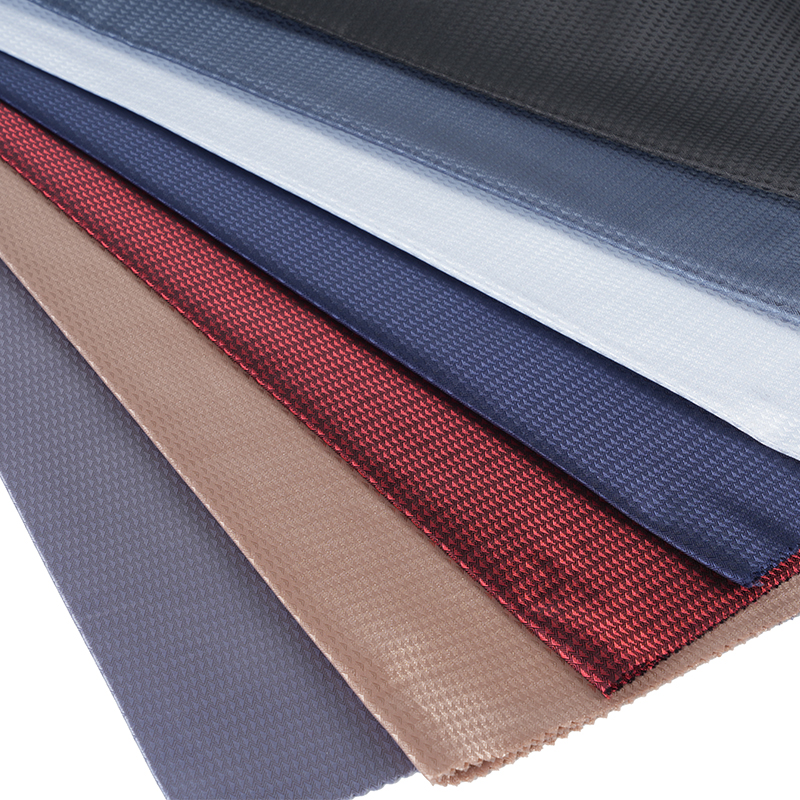
Imagine a jacket lining that irritates the neck, wrinkles at the elbow, and separates from the outer fabric after a few dry-clean cycles. These failures usually trace back to a lining with the wrong weave or fiber for the garment. For most suits, blazers, and outerwear, polyester twill lining avoids those problems. The twill construction delivers a smooth, durable inner layer, while polyester keeps the cost down and simplifies care. This guide explains what polyester twill lining is, how it behaves, which variants suit different products, and how to evaluate suppliers before committing to bulk production.
What Is Polyester Twill Lining?
A twill weave creates a diagonal pattern by floating the weft yarn across two or more warp yarns before going under one. The result is a fabric with visible ribs, higher yarn density, and a softer hand than plain weaves. When the yarn is 100% polyester filament, the same structure becomes a lining material that resists abrasion, absorbs less moisture, and holds its shape during repeated wear.
In practice, polyester twill lining is specified by yarn denier and thread count. A common construction is 75D by 75D polyester filament with a 190T to 230T thread count, woven in a 2/1 or 2/2 twill. This gives enough substance to slide over outer layers without being stiff. It also covers seams, padding, and interlinings more effectively than a loose plain weave.
The category includes several engineered variants, so the name "polyester twill lining" covers more than one fabric. The next sections break down the practical differences.
Why Choose Polyester Twill for Lining?
Start with the conclusion: if a lining must survive constant friction, support structure, and stay smooth inside a jacket, polyester twill is one of the most balanced options. The diagonal structure spreads stress better than plain weaves, which makes it noticeably more tear-resistant at seams. Polyester filament itself offers low moisture regain, so the lining dries quickly and resists shrinking in humid storage.
The trade-off is breathability. Because polyester absorbs little moisture, a jacket made entirely of polyester twill can feel damp in hot weather without a breathable back coating or a cellulosic content. That is why many mills add moisture-wicking or antistatic finishes, and why blends such as poly-rayon twill exist.
- High abrasion resistance at the seams and sleeve heads
- Good wrinkle recovery after packing or folding
- Easy care in regular use
- Consistent dye uptake across production lots
- Lower material cost than viscose or acetate twill
Below is a practical comparison of lining materials used in the same garment type.
| Property | Polyester twill | Polyester plain | Viscose twill | Acetate twill |
|---|---|---|---|---|
| Abrasion resistance | High | Medium | Medium | Medium |
| Wrinkle recovery | High | High | Low | Medium |
| Moisture absorption | Low | Low | High | Medium |
| Breathability | Medium | Low | Medium | High |
| Relative cost | Low | Lowest | Medium | High |
| Typical use | Suits, jackets | Budget garments | Premium wear | High-end dresses |
The cost gap becomes clear when the same lining width and finish are quoted by weight. Polyester plain is the cheapest, polyester twill adds about 15-20% to the mill price, and acetate can cost more than double. That premium is justified only when the outer shell and the lining need a similar level of luxury.
Relative Cost Index
Key Variants and How to Read Them
Not all polyester twill lining feels or performs the same. The main differences are yarn type, filament count, and finishing. Here are the three most common variants you will encounter when sourcing.
Polyester Shumei Silk
This is a standard half-dull polyester twill with a smooth, slightly lustrous face and a soft drape. It is the workhorse for suiting and blazers because the diagonal line is fine enough to hide wrinkles without adding bulk.
 Polyester Shumei Silk Lining Fabric for Coats and SuitsA smooth, wrinkle-resistant lining with soft luster and good drape, ideal for mid-to-high-end garments. Its tight structure complements the lightweight twill discussed before and the coarser option after.View Product →
Polyester Coarse Twill
Coarse twill uses heavier denier yarns and a wider twill line. The texture is more pronounced and the hand is thicker, which makes it a better match for winter coats, structured jackets, and outerwear that requires a firmer lining.
 Polyester Coarse Twill Fabric for Structured OuterwearA heavier, durable twill with pronounced texture, suitable for winter coats and structured jackets. It bridges the fine twill and the cationic variant, offering a firmer hand for outerwear linings.View Product →
Cationic Fine Twill
Cationic yarns take dye differently from regular polyester, producing a subtle two-tone or heathered effect. This variant is popular in women's wear and fashion jackets where the lining is briefly visible during movement.
 Cationic Fine Twill Lining with Subtle Two-Tone EffectA fine twill with cationic dyeing for enhanced color retention and a heathered look. Its breathable, comfortable nature makes it a step toward poly-rayon blends, popular in fashion jackets and dresses.View Product →
If a lining must be more breathable and absorbent, a poly-rayon twill blend is the natural next step. It costs more but improves comfort in suits worn for long hours.
Technical Specifications That Matter
When a lining fails in production, the cause is usually a dimensional mismatch or a missed finish. These are the specifications to verify before approving a bulk order.
| Specification | Typical range | Why it matters |
|---|---|---|
| Yarn count | 75D by 75D, 100D by 100D | Affects hand, drape, and strength |
| Thread count | 190T to 300T | Higher T improves coverage and durability |
| Weight | 80 to 120 g/m² | Matches garment insulation and structure |
| Width | 150 cm / 58" | Determines cutting yield |
| Color fastness | 3 to 4 (ISO 105-C06) | Prevents color migration in dry cleaning |
| Dimensional stability | max 3% shrinkage (AATCC 135) | Avoids puckered seams after laundering |
Antistatic and moisture-wicking finishes are optional but recommended for dark linings or garments intended for humid climates. For a deeper look at whether these treatments matter, see this analysis of antistatic polyester twill.
Sourcing and Quality Control
A good specification is only half the battle. The risk of color variation between production lots always exists with dyed linings. When you source polyester twill lining, ask for a pre-production sample in the exact color and finish required. Test the following before bulk:
- Compare the shade band against the gold standard.
- Test shrinkage on a jacket after one dry-clean cycle.
- Check seam slippage at the armhole and center back.
- Evaluate handfeel after finishing and pressing.
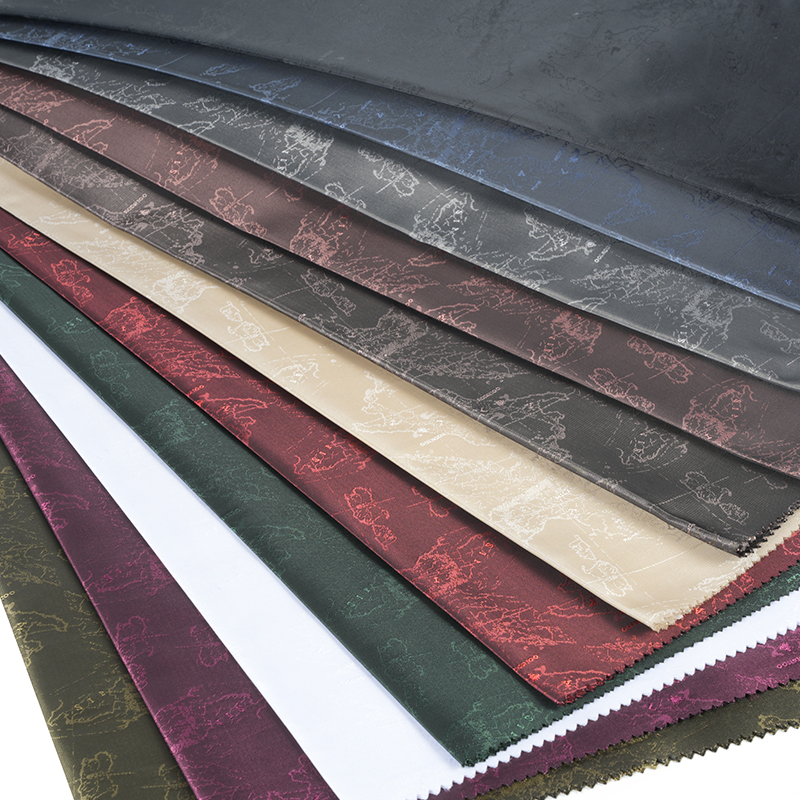
A specialist mill will usually catch these issues early. Since 2003, our facility in the China Textile City has focused on woven lining fabrics, including twill, dobby, and jacquard constructions. We also handle garment-related finishes such as calendering, coating, and printing. That concentration is why buyers often find it easier to keep quality consistent when working with a dedicated lining supplier. Contact us to request the current twill lining cards.
Polyester twill lining is not the flashiest material in a garment, but it performs. It resists wear, recovers from packing stress, and fits most production budgets. The key is to match the variant to the end use, verify the critical specifications, and work with a supplier who understands lining-specific quality issues. Start with a measured sample in the actual color, check the shrinkage numbers, and then scale. That approach will save you from the most common lining failures.





 +86-81163100 / +86-13957571090

 Room B12148, Wanguo Center, No. 1388, Jinkeqiao Avenue, Keqiao, Shaoxing, Zhejiang, China
