

 English
 中文简体
中文简体
Selecting the ideal jacquard lining requires aligning the fiber’s thermal mechanics with the outer garment's structural weight. For bespoke tailoring and high-wear premium outerwear, 100% viscose or viscose-acetate blends woven on computerized Jacquard looms offer the optimal baseline. They deliver a superior balance of moisture regain (11% to 13%), smooth skin-slip friction coefficients, and dimensional stability. While pure silk jacquard remains the pinnacle for luxury weightlessness, synthetic polyester alternatives should be restricted to low-breathability, water-resistant utilitarian utility due to their poor thermal dissipation.
Weave Mechanics: How Jacquard Engineering Alters Interior Garment Dynamics
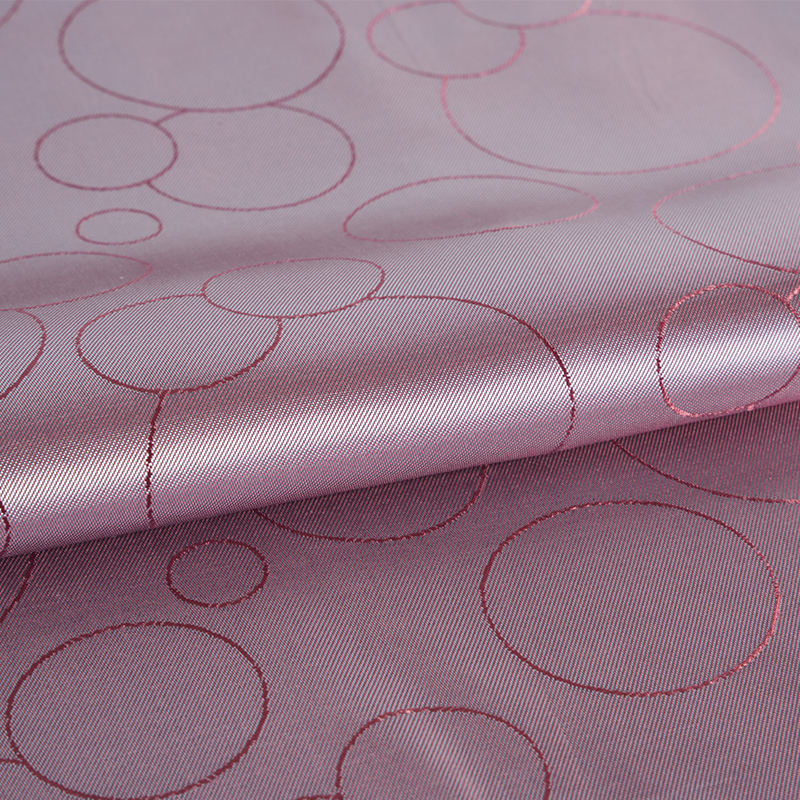
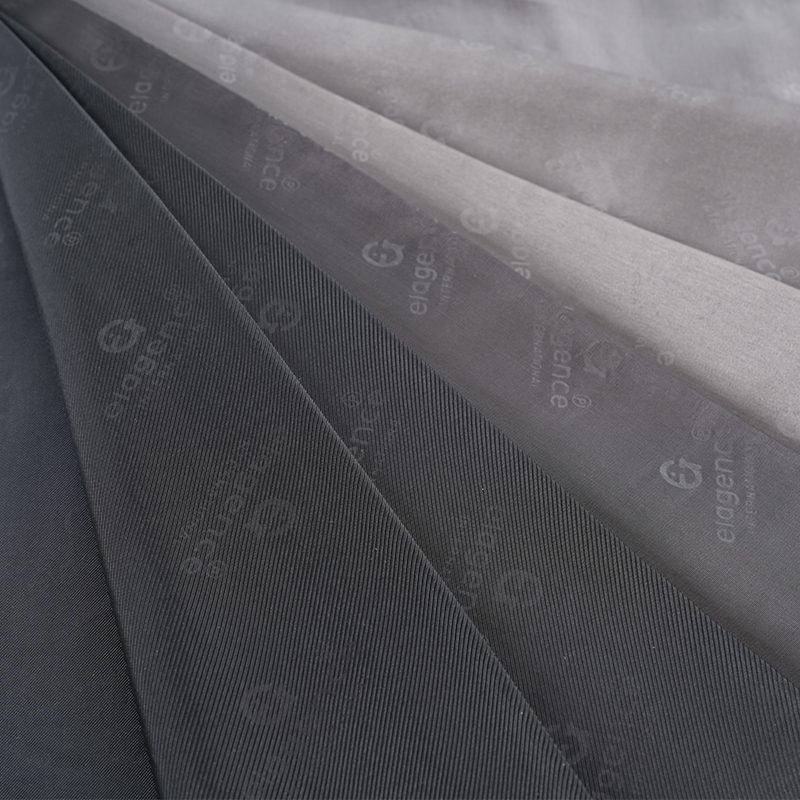
Unlike standard piece-dyed or rotary-printed lining fabrics, true jacquard lining incorporates intricate geometric, organic, or custom heraldic patterns directly into the crystalline matrix of the textile itself. Invented by Joseph Marie Jacquard, this mechanical methodology utilizes independent warp yarn control to dictate complex structural floats. This allows for contrasting matte and lustrous surfaces within a single millimeter of fabric face.
From a structural engineering standpoint, the multi-layered yarn floats inherent to jacquard patterns alter the fabric's physical behavior. The variation between satin, twill, and plain weave structures within the same jacquard pattern creates micro-channels. These channels trap pockets of air, enhancing the insulation properties of the garment without adding physical bulk or mass. Furthermore, the localized density of a jacquard weave prevents pocket keys, interior hardware, and heavy seam allowances from telegraphing through to the exterior shell fabric.
| Lining Material Class | Moisture Regain (%) | Static Propensity | Dry-Clean Stability |
|---|---|---|---|
| Visquard (Viscose Jacquard) | 11.0 – 13.0 | Negligible (Hydrophilic) | Excellent (Low shrinkage) |
| Acetate/Cupro Jacquard | 6.0 – 11.0 | Low to Moderate | Superior (No water-spotting) |
| Filament Silk Jacquard | 11.0 – 11.5 | Moderate (Triboelectric effect) | Sensitive (Requires delicate care) |
| Polyester Jacquard | 0.4 – 0.8 | Extremely High (Hydrophobic) | Impenetrable (Prone to iron shine) |
Fiber Performance Analysis: Regenerated Cellulose vs. Synthetic Polymers
The performance profile of an intricate jacquard interior lining is heavily governed by the chemical composition of its filaments. Experienced master tailors prioritize regenerated cellulose variants—specifically viscose, cupro, and acetate—over petroleum-derived synthetics. The core differentiator lies in their interaction with ambient human microclimates.
Viscose jacquards mimic the molecular structure of natural cotton, allowing moisture molecules to readily penetrate the fiber core. This high rate of absorption yields exceptional breathability and comfort. Conversely, synthetic polyester jacquards trap perspiration against the skin, inducing an uncomfortable clammy sensation inside structured wool overcoats.
- ∎ Viscose Interlocking Jacquard: Boasts a distinct fluid drape and dense thermal shielding. Its high absorption capacity prevents localized moisture accumulation, making it ideal for multi-season tailored jackets.
- ∎ Cupro/Bemberg Jacquard Structures: Exhibits a smooth, circular cross-section that reduces skin friction. It is highly resistant to perspiration stains and maintains its silky texture even after prolonged contact with acidic body oils.
- ∎ Cellulose Acetate Variants: Resists wrinkling, shrinking, and stretching. Acetate yarns produce deep color saturation and rich visual contrast in dual-tone jacquard motifs, though they possess less raw tensile strength than viscose.
Tactile Dynamics: Evaluating the Friction Coefficient and Wear Ergonomics
The operational role of a lining fabric is to allow a structured coat or jacket to slide smoothly over inner layers of knitwear or cotton shirting without binding, catching, or restricting movement. To achieve this, the surface of a jacquard lining must maintain a low static and kinetic coefficient of friction.
The configuration of jacquard patterning introduces subtle textures that can alter this tactile behavior. For instance, a jacquard weave with long, floating warp filaments yields a silky satin finish that reduces friction. However, if these floats are too long, they become vulnerable to snagging on watch bands, belts, or interior garment hardware.
High-end mills resolve this by engineering patterns with a maximum float length of 1.5 mm to 2.0 mm. This technical constraint preserves a smooth, low-friction texture while ensuring the fabric can withstand the daily friction and abrasion of wear.
Triboelectric accumulation is another critical consideration. When two dissimilar materials rub together—such as a wool shell and a synthetic lining—they generate a static charge. Polyester fabrics accumulate static rapidly, causing the lining to cling uncomfortably to the wearer's trousers or shirt. Cellulosic jacquards, due to their inherent moisture retention, naturally dissipate these electrostatic charges, preserving a clean drape and comfortable fit.
Durability Metrics: Seam Slippage and Abrasion Resistance Parameters
Perimeter lining installations face significant mechanical stress at key movement centers, including the armholes, back pleats, and sleeve intersections. Seam slippage—the structural separation of warp or weft yarns adjacent to a stitched line—is a common failure point for poor-quality lining fabrics.
Standard testing using the ASTM D434 method evaluates a fabric's resistance to seam slippage under a set load. Due to their complex, multi-point locking structures, high-density jacquard linings demonstrate superior seam stability compared to plain-woven linings. The interlocking pattern points act as integrated structural blocks that prevent individual filament yarns from shifting out of alignment under stress.
Technical Standard Note: Premium jacquard linings engineered for luxury tailoring are certified to survive a minimum of 25,000 rubs on the Martindale Abrasion Test (ISO 12947). This heavy-duty performance profile ensures the fabric will not thin or pill from repetitive movement against the hips and shoulders over the lifetime of the garment.
Sartorial Architecture: Colorfastness, Pressing Requirements, and Maintenance
The integration of a jacquard lining introduces distinct requirements for dry cleaning and pressing. Because jacquard patterns often combine dyed yarns of varying intensities, excellent colorfastness to wet pressing and dry cleaning is essential. Poorly fixed dyes can bleed under hot steam, potentially staining the delicate wool or cashmere outer shell.
During construction, tailoring technicians must adjust pressing temperatures to suit the lining's fiber profile. Pure silk and viscose jacquards can handle iron temperatures up to 150°C using a dry pressing cloth. Acetate jacquards, however, are thermoplastic and will fuse or develop permanent surface shine if ironed above 120°C.
Furthermore, weavers must tightly manage the tension across the loom beam during production. Uneven tension can cause the jacquard pattern to contract irregularly when exposed to steam, distorting the smooth silhouette of the finished coat. Choosing a balanced, high-density jacquard lining ensures the garment retains its shape, structure, and elegant interior appearance through years of professional maintenance.
 Previous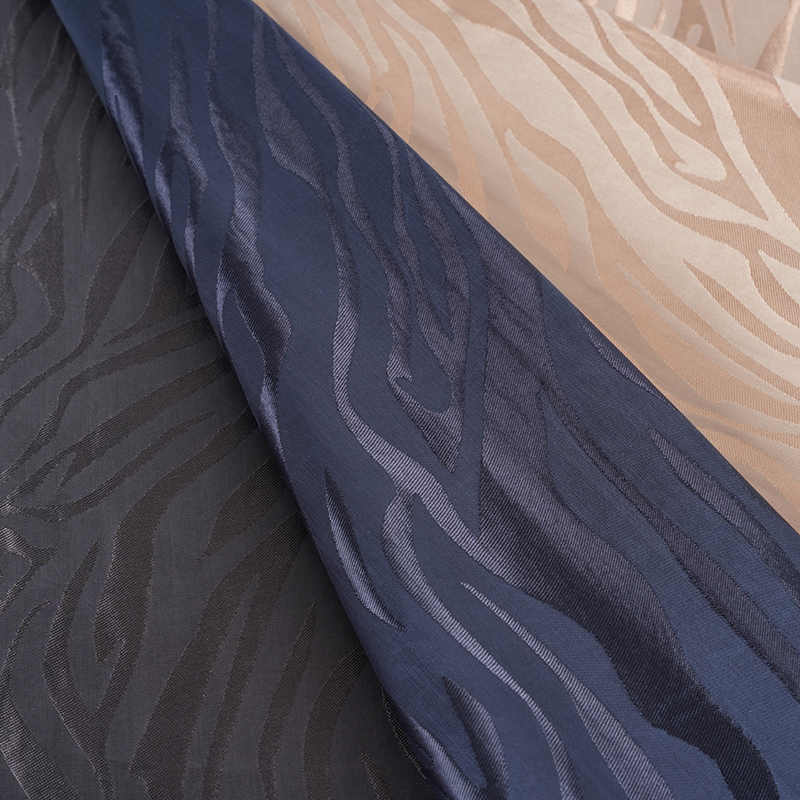

 +86-81163100 / +86-13957571090
 Room B12148, Wanguo Center, No. 1388, Jinkeqiao Avenue, Keqiao, Shaoxing, Zhejiang, China