
 English
 中文简体
中文简体
The short answer: jacquard lining is woven, not printed, which means its pattern is built into the structure of the fabric itself rather than sitting on the surface. That single difference is why it outlasts printed linings by years rather than months, holds its color and texture through repeated dry cleaning, and is the standard choice for tailored jackets, coats, and premium outerwear where the inside of the garment is expected to look as deliberate as the outside. The comparison below breaks down exactly where jacquard earns that reputation, where it doesn't matter as much, and when a simpler lining is the smarter choice.
What Makes Jacquard Lining Structurally Different
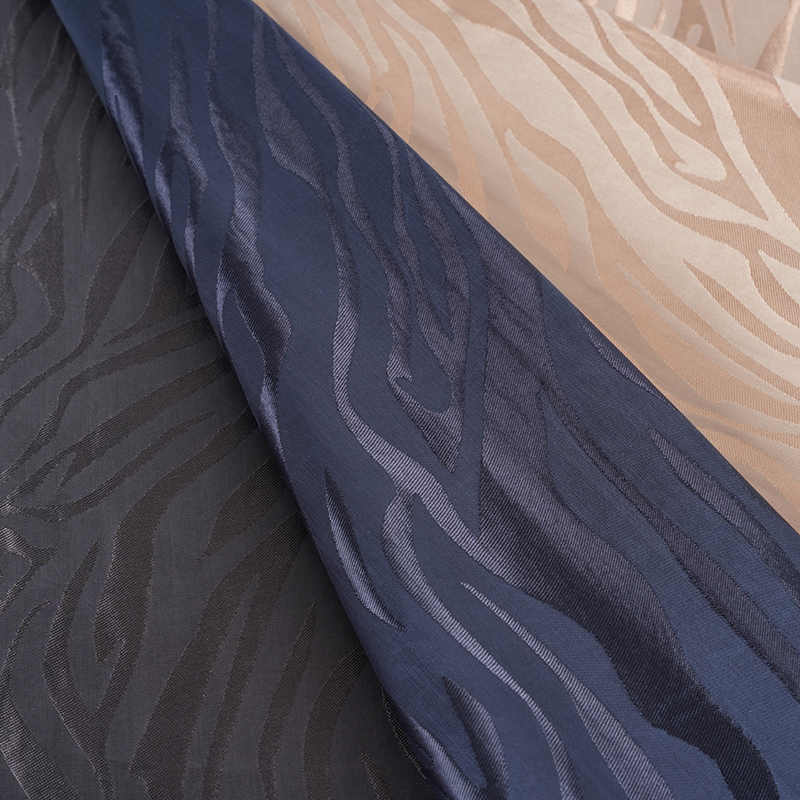
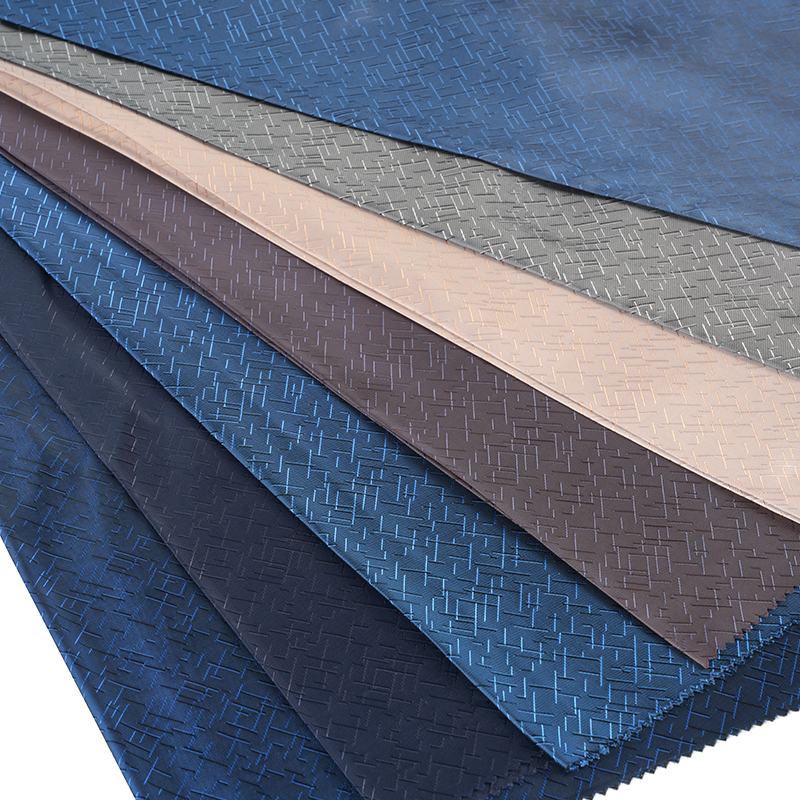
Most linings get their pattern one of two ways: a design is printed onto plain woven fabric, or the pattern is woven directly into the fabric using a jacquard loom that controls each warp thread individually. Jacquard lining belongs to the second category, and that distinction shows up the moment the fabric is touched. Because the pattern is created by the weave structure — alternating float and tie-down points across hundreds of individually controlled threads — the design has a subtle dimensional quality, with slightly raised and recessed areas that catch light differently depending on the angle.
A printed lining, by contrast, starts as a flat, undyed or solid-colored base cloth, usually a plain weave, with the pattern applied afterward through screen printing, roller printing, or digital transfer. The pattern sits entirely on the surface of the fibers. This is faster and cheaper to produce, but it also means the design is only as durable as the print itself.
2–3x Longer pattern retention vs. printed lining
80–120 Threads per cm typically controlled on a jacquard loom
30–50% Typical cost premium over printed lining
Jacquard Lining vs. Printed Lining in Daily Wear
The difference between woven and printed pattern becomes obvious after repeated wear, not on day one. Friction at the shoulders, cuffs, and pocket openings — the points where a lining rubs against a shirt or undergarment hundreds of times per wear — is where printed designs first show fading, cracking, or a slightly chalky surface as the pigment binder wears away. Because jacquard's pattern is woven into the yarn structure, there is no separate pigment layer to abrade off; the color is in the thread itself; in most jacquard linings, the yarns are dyed before weaving, so the color runs through the entire thickness of the fiber, not just the surface.
| Factor | Jacquard Lining | Printed Lining |
|---|---|---|
| Pattern formation | Woven into fabric structure | Applied to surface after weaving |
| Wear resistance at friction points | High — pattern doesn't sit on surface | Moderate — pattern can fade or crack over time |
| Surface texture | Slightly dimensional, tactile | Flat, smooth |
| Color depth | Runs through yarn thickness | Surface-level pigment only |
| Production cost | Higher — specialized loom setup | Lower — standard weave plus print run |
| Best suited for | Tailored garments, outerwear, premium linings | Fast fashion, budget garments, seasonal items |
Why Tailors Favor Jacquard for Structured Garments
Structured garments — blazers, overcoats, suit jackets — place real mechanical demands on lining fabric. The lining has to slide smoothly over a shirt sleeve when putting the jacket on, resist stretching out of shape at the armhole, and lie flat without bunching at the back vent. Jacquard weaves, because they typically use a tighter, more controlled thread count than plain-woven printed linings, tend to have a slightly firmer hand and better dimensional stability. This matters most at stress points: the underarm seam and the back yoke, where a lining with poor recovery will visibly sag or wrinkle within a season.
This is also why jacquard appears overwhelmingly in mid-to-high tier tailoring rather than casual wear. A casual jacket's lining rarely needs to survive years of dry cleaning and daily friction the way a work blazer's does, so the cost premium of jacquard isn't always justified there.
Common jacquard lining fiber bases
- Polyester jacquard — the most common base for commercial garment lining; durable, affordable, and resistant to wrinkling, though less breathable than natural fibers.
- Viscose/rayon jacquard — softer hand and better breathability, often used in higher-end coats, but more prone to water spotting and requires more careful cleaning.
- Silk jacquard — reserved for luxury tailoring; exceptional drape and sheen, but the highest cost and least durable against everyday friction.
- Polyester-viscose blends — a middle ground that balances drape, durability, and cost, common in better ready-to-wear jackets and coats.
Weight and Drape: Matching Lining to Garment Type
Not all jacquard lining behaves the same way, and weight is the variable that matters most when matching lining to a specific garment.
| Lining Weight | Typical Range | Best Garment Match |
|---|---|---|
| Lightweight | 60–80 gsm | Summer blazers, unstructured jackets |
| Mid-weight | 80–110 gsm | Suit jackets, structured blazers |
| Heavyweight | 110–150+ gsm | Overcoats, winter outerwear |
A heavyweight jacquard lining inside a lightweight summer jacket will fight the outer fabric's drape, making the garment feel stiffer and bulkier than intended. The reverse problem — a lightweight lining inside a heavy wool overcoat — leads to a lining that wears out long before the shell fabric does, since it's absorbing structural stress it wasn't built to handle.
How Jacquard Lining Affects Garment Cost and Positioning
From a production standpoint, jacquard lining is one of the more visible cost signals inside a finished garment, even though most buyers never see the lining until they try the piece on. Setting up a jacquard loom pattern requires programming the weave structure for each design, which adds setup cost that only pays off at sufficient production volume. This is part of why jacquard lining is rarely found in entry-level garments and consistently appears in pieces positioned at a higher price point — the lining itself is functioning as a quiet quality signal, often revealed only at the cuff, vent, or interior pocket.
Retailers and brand designers frequently use this deliberately: a patterned jacquard lining visible through a half-turned cuff or an open jacket front communicates craftsmanship without requiring the customer to read a fabric label.
Care note: jacquard lining generally tolerates dry cleaning better than printed lining, but viscose and silk jacquard variants can still be sensitive to moisture and heat. Always check the specific fiber content on the lining's care label separately from the shell fabric's care instructions — the two are often different fibers with different cleaning requirements.
When a Simpler Lining Is the Better Choice
Jacquard isn't the right answer for every garment, and treating it as a universal upgrade misses the actual trade-offs involved.
- Lightweight summer pieces often benefit more from a simple plain-weave lining with good moisture-wicking properties than from jacquard's denser construction, which can trap heat.
- Budget-conscious production runs rarely reach the volume needed to justify jacquard loom setup costs, making printed or plain lining the more economical and equally functional choice.
- Garments with minimal lining exposure — fully enclosed jackets where the lining is never glimpsed — gain little visual benefit from a patterned weave, since the main value of jacquard is partly aesthetic.
- High-stretch garments that need to move with the body are often better served by a lining with engineered stretch, which jacquard's tighter weave structure doesn't typically provide.
Identifying Genuine Jacquard Before Purchase
Because jacquard's reputation makes it a selling point, the term gets applied loosely in product descriptions. A few checks help confirm a lining is genuinely woven rather than printed:
- Hold the fabric up to a strong light source — woven jacquard pattern will show subtle texture and slight color variation on both sides, while a printed pattern typically looks identical front-to-back or shows a faded, indistinct version of the design on the reverse.
- Run a fingernail lightly across the surface — genuine jacquard has a faint raised-and-recessed texture corresponding to the pattern, while printed fabric feels uniformly flat.
- Check the reverse side directly — true jacquard shows the pattern's negative or a clearly structural echo of the design on the back; a printed lining shows plain, undecorated base cloth on the reverse.
Practical takeaway: reserve jacquard lining for garments where durability and a refined finish actually matter — tailored jackets, coats, and pieces meant to last multiple seasons. For casual, seasonal, or high-volume budget pieces, a well-chosen printed or plain lining will perform just as well without the added cost.
 Previous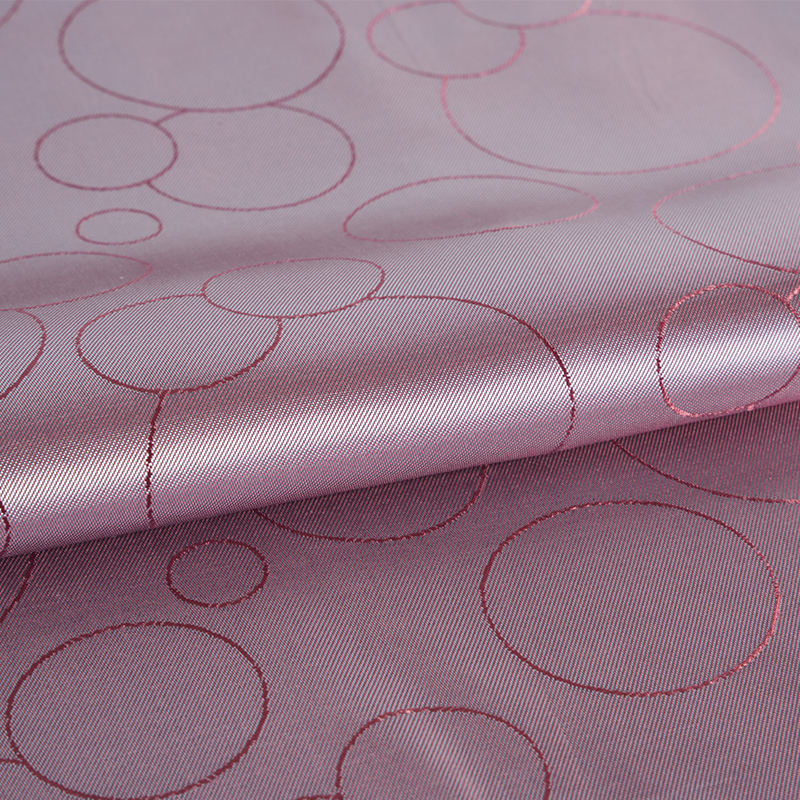

 +86-81163100 / +86-13957571090
 Room B12148, Wanguo Center, No. 1388, Jinkeqiao Avenue, Keqiao, Shaoxing, Zhejiang, China